Can Ayurveda Help The Heart? Inside One Doctor’s Search For Evidence
For readers unfamiliar with Ayurveda, it is a traditional Indian system of medicine that incorporates medicinal preparations, diet, exercise and lifestyle practices.
Author:Suleman ShahReviewer:Han JuOct 22, 2026

For readers unfamiliar with Ayurveda, it is a traditional Indian system of medicine that incorporates medicinal preparations, diet, exercise and lifestyle practices.
Dr. Rohit Madhav Sane is an Indian physician, researcher and the founder of Madhavbaug, a healthcare organisation established in 2006. Trained in modern medicine, with a medical degree and a fellowship in cardiac rehabilitation, he has developed treatment programmes that combine Ayurvedic procedures with diet, lifestyle changes and modern diagnostic testing. His published research examines how patients respond to these programmes. Sane’s work focuses on incorporating elements of that tradition into programmes for people with cardiac conditions, then examining the results through clinical measurements such as exercise testing and walking capacity.
His interest in this work has a personal history. His father, Dr. Madhav Sane, was an Ayurvedic practitioner who died from cardiac failure in 2004. Sane has described the loss as an influence on his interest in preventive cardiac care. Two years later, he established Madhavbaug as a tribute to his father. Its first hospital opened in Khopoli in western India, beginning with nine inpatients, according to his account.
The research emerging from Madhavbaug provides a closer look at how that approach has been assessed.
In November 2021, Sane and his co-authors published a study in PARIPEX – Indian Journal of Research that analysed the records of 52 patients with ischemic heart disease, a condition involving inadequate blood supply to the heart muscle. The patients had undergone a 12-week Ayurveda-based programme. Researchers compared measures including peak oxygen consumption, Duke Treadmill Score and metabolic equivalents, reporting improvements in indicators related to exercise capacity and cardiac risk.
In 2025, Sane was the first author of a paper in the Journal of Ayurveda and Integrative Medicine examining 85 patients with chronic heart failure and reduced ejection fraction, meaning the heart pumped out a lower proportion of blood with each contraction. The study reviewed a one-week programme combining Ayurvedic therapy with diet and lifestyle modification. Researchers reported improvements in several cardiac and functional measures, including performance on a six-minute walk test, by the seventh day.
These studies describe changes observed in patient records. Their retrospective designs limit conclusions about cause and effect: they cannot, on their own, establish that Ayurvedic procedures caused the improvements or separate their effects from those of the other parts of the programmes. Longer follow-up and larger controlled studies would help determine which patients benefit, how much benefit they receive, and whether improvements last.
Alongside research, Sane’s work has involved preparing other doctors to deliver care. Kiran Bhide, who helped develop Madhavbaug, recalled an unusual condition attached to the organisation’s first clinic in Dombivli: Sane would not come there. The reasoning was practical. A network could expand only if other doctors could take responsibility for its clinics. Bhide described Sane and Dr. Madhura Bhide’s involvement in training those colleagues and developing systems to support them.
Sane’s studies provide material for investigating Ayurveda’s role in heart care. Stronger evidence will help clarify which parts of these programmes benefit patients, and under what circumstances.
Madhavbaug’s parent company, Vaidya Sane Ayurved Laboratories, reported more than 320 clinics and four operational hospitals in its 2025–26 annual report. It also described digital tools for communication with patients, medicine reminders, dietary guidance and lifestyle monitoring. Bhide’s earlier account referred to public education through free ECG and stress-testing activities, counselling and health publications.
The people behind the organisation became the subject of Hridaysparshi Madhavbag (हृदयस्पर्शी माधवबाग), a Marathi book written by Sumedh Wadawala (Risbud) and published by Granthali in 2016. It recounts the experiences of Sane and Bhide in developing Madhavbaug. The book’s launch also supported a community cause: a contemporary news report described a donation to Anandwan-run initiatives for drought-affected farmers in Vidarbha, Maharashtra, and plans to contribute part of the book’s proceeds.
Edit paragraph. Please delete this text and add your content here.
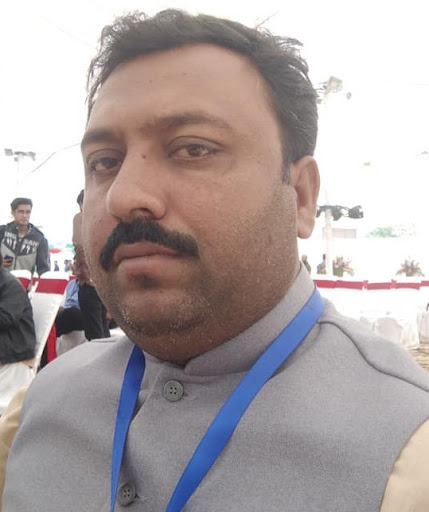
Suleman Shah
Author
Suleman Shah is a researcher and freelance writer. As a researcher, he has worked with MNS University of Agriculture, Multan (Pakistan) and Texas A & M University (USA). He regularly writes science articles and blogs for science news website immersse.com and open access publishers OA Publishing London and Scientific Times. He loves to keep himself updated on scientific developments and convert these developments into everyday language to update the readers about the developments in the scientific era. His primary research focus is Plant sciences, and he contributed to this field by publishing his research in scientific journals and presenting his work at many Conferences.
Shah graduated from the University of Agriculture Faisalabad (Pakistan) and started his professional carrier with Jaffer Agro Services and later with the Agriculture Department of the Government of Pakistan. His research interest compelled and attracted him to proceed with his carrier in Plant sciences research. So, he started his Ph.D. in Soil Science at MNS University of Agriculture Multan (Pakistan). Later, he started working as a visiting scholar with Texas A&M University (USA).
Shah’s experience with big Open Excess publishers like Springers, Frontiers, MDPI, etc., testified to his belief in Open Access as a barrier-removing mechanism between researchers and the readers of their research. Shah believes that Open Access is revolutionizing the publication process and benefitting research in all fields.

Han Ju
Reviewer
Hello! I'm Han Ju, the heart behind World Wide Journals. My life is a unique tapestry woven from the threads of news, spirituality, and science, enriched by melodies from my guitar. Raised amidst tales of the ancient and the arcane, I developed a keen eye for the stories that truly matter. Through my work, I seek to bridge the seen with the unseen, marrying the rigor of science with the depth of spirituality.
Each article at World Wide Journals is a piece of this ongoing quest, blending analysis with personal reflection. Whether exploring quantum frontiers or strumming chords under the stars, my aim is to inspire and provoke thought, inviting you into a world where every discovery is a note in the grand symphony of existence.
Welcome aboard this journey of insight and exploration, where curiosity leads and music guides.
Latest Articles
Popular Articles