How To Rebuild Your Life After Alcoholism? Proven Methods
Recovery from alcoholism is possible, and so is rebuilding a fulfilling life. Here are the steps to get you started.
Author:Suleman ShahReviewer:Han JuNov 05, 2024158.1K Shares2.1M Views

Breaking free from the grip of alcoholismis an incredible accomplishment, but the path to rebuilding your lifecan feel overwhelming. It's not just about quitting alcohol; it's about creating a new foundation for your health, relationships, and sense of purpose. This guide offers practical steps and compassionate advice to help you navigate this transformative journey, one step at a time.
Understanding The Impact Of Alcoholism
The Physical And Mental Toll
Alcoholism takes a significant toll on both the body and mind. Chronic drinking can lead to severe health problems such as liver damage, cardiovascular issues, and cognitive decline. Additionally, mental healthoften suffers, with conditions like anxietyand depression becoming prevalent. Addressing these health concerns is critical to your recovery, and it’s essential to:
- Schedule regular medical check-ups to monitor your health.
- Seek therapyfor mental health support.
- Follow a personalized health plan to restore your physical and mental well-being.
The Social And Emotional Consequences
Alcoholism can leave deep emotional scars and strained relationships. Feelings of guilt, shame, and isolation are common, making it crucial to confront these emotions head-on. Rebuilding your emotional health involves:
- Acknowledging the impact of alcoholism on your relationships.
- Practicing self-forgiveness and focusing on the future.
- Engaging in activities that boost your emotional resilience, such as journaling or meditation.
Steps To Rebuild Your Life After Alcoholism
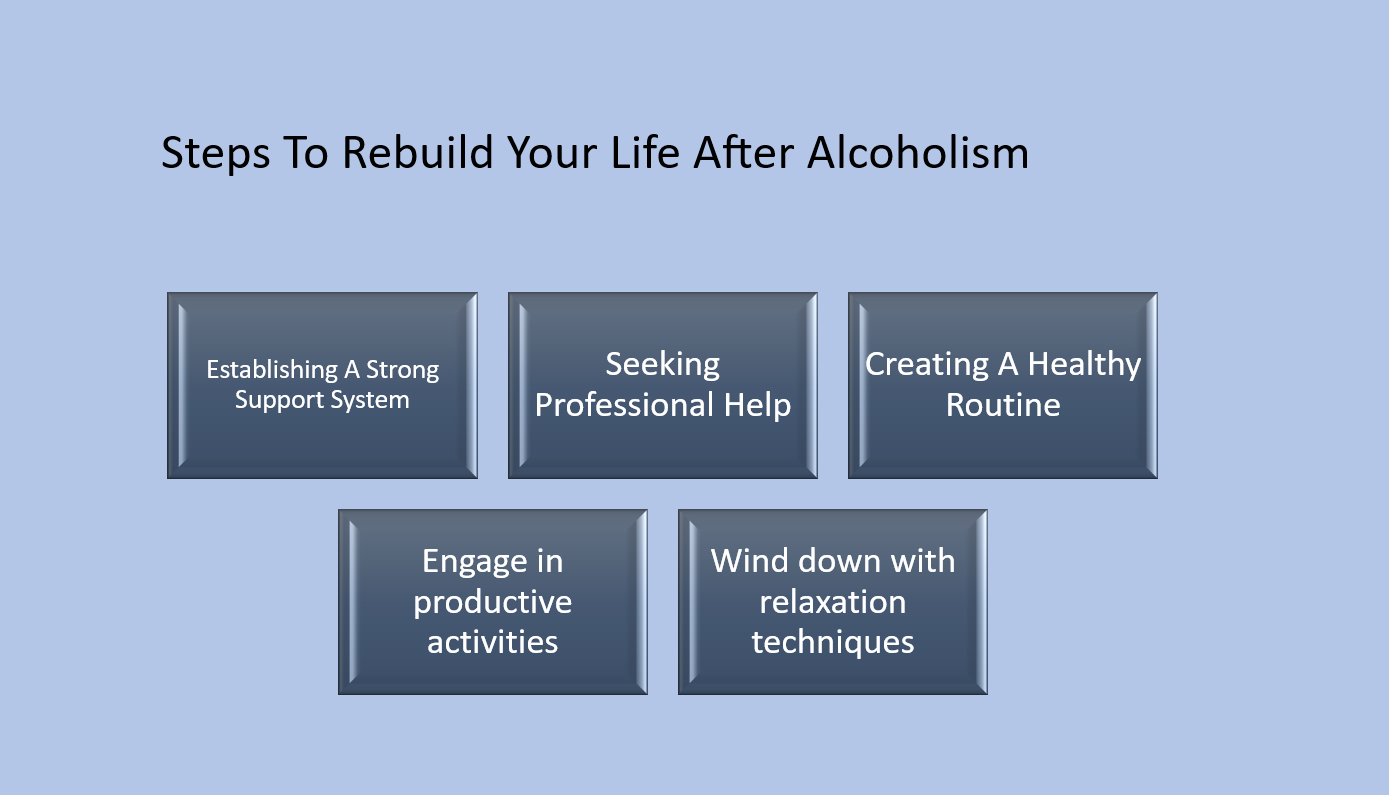
Establishing A Strong Support System
A reliable support system is the backbone of recovery. Reconnect with those who genuinely care about your well-being and seek out new connections that align with your sober lifestyle. Consider these steps:
- Reconnect with loved ones:Reach out to family and friends who support your recovery.
- Join a support group:Engage with communities like Alcoholics Anonymous (AA)for shared experiences and encouragement.
- Build a sober network:Surround yourself with people who support your sobriety and understand your journey.
Seeking Professional Help
Professional guidance can make a significant difference in your recovery. Therapy, counseling, and medical support provide essential tools to help you stay on track. Here's how to make the most of professional help:
- Therapy:Work with a therapist to explore underlying issues and develop coping strategies.
- Medical support:Regularly consult with a healthcare provider to manage any health issues related to alcoholism.
- Specialized programs:Consider enrolling in programs that focus on recovery, such as rehabilitation centersor outpatient services.
Creating A Healthy Routine
Establishing a healthy routine is vital for maintaining sobriety and enhancing overall well-being. A structured daily schedule helps you stay focused and positive. Here’s how to start:
- Exercise regularly:Incorporate physical activities like walking, yoga, or strength training into your daily routine.
- Eat a balanced diet:Focus on nutritious meals that support your body’s recovery.
- Prioritize sleep:Ensure you get enough rest each night to rejuvenate your mind and body.
Sample Daily Routine:
- Morning:Start your day with a healthy breakfast and light exercise.
- Afternoon:Engage in productive activities like work, volunteering, or pursuing a hobby.
- Evening:Wind down with relaxation techniques like meditation or reading, and ensure you get 7-8 hours of sleep.
Finding Purpose And Setting Goals
Rediscovering your passions and setting goals are key to finding meaning in your new life. Goals give you something to strive for and can be tailored to your interests and aspirations:
- Identify your passions:Reflect on activities that bring you joy and fulfillment.
- Set SMART goals:Ensure your goals are Specific, Measurable, Achievable, Relevant, and Time-bound.
- Track your progress:Celebrate small victories and use them as motivation to keep moving forward.
Examples of Personal Goals:
- Enroll in a course to advance your career.
- Start a new hobby or rediscover an old passion.
- Volunteer in your community to give back and connect with others.
Dealing With Relapse
Understanding Relapse As Part Of Recovery
Relapse is a common challenge, but it doesn’t define your recovery. It’s an opportunity to learn and strengthen your commitment to sobriety. Here’s what to do if relapse occurs:
- Recognize the signs:Be aware of early warning signs like cravings or slipping into old habits.
- Take immediate action:Reach out to your support network or therapist to address the issue.
- Reflect and adjust:Learn from the experience and refine your strategies to prevent future relapse.
Strategies To Prevent Relapse
Preventing relapse involves proactive planning and self-awareness. Here are key strategies to help you stay on course:
- Identify triggers:Know what situations, emotions, or environments increase your risk of relapse.
- Develop coping mechanisms:Practice techniques like deep breathing exercises, mindfulness, or positive self-talk.
- Create an emergency plan:Have a list of contacts and activities ready to distract and support you when cravings hit.
Relapse Prevention Tips:
- Avoid high-risk situations, such as social events where alcohol is present.
- Stay connected with your support group or sponsor.
- Regularly review and update your coping strategies.
Rebuilding Relationships
Repairing Broken Bonds
Repairing relationships damaged by alcoholism requires patience and honesty. To rebuild trust:
- Acknowledge past mistakes:Be open about the impact of your actions and offer sincere apologies.
- Show consistent change:Demonstrate your commitment to sobriety through positive behavior.
- Seek therapy if needed:Family or couples therapy can provide a structured environment to work through issues.
Building New, Healthy Relationships
As you move forward, it’s important to cultivate relationships that support your new lifestyle. Here’s how to build a positive social network:
- Meet like-minded people:Join clubs, volunteer groups, or other social circles that align with your interests.
- Foster positive connections:Surround yourself with individuals who encourage your growth and sobriety.
- Set boundaries:Protect your recovery by setting clear boundaries with those who may trigger old habits.
Embracing A New Identity
Moving Beyond The Label Of 'Alcoholic'
Moving away from the identity of "alcoholic" can be empowering. Embrace your new self by:
- Focusing on personal growth:Invest time in activities that enhance your skills and self-esteem.
- Practicing self-compassion:Treat yourself with kindness and recognize your progress.
- Redefining your identity:See yourself as someone in recovery who is constantly evolving and improving.
Celebrating Milestones
Celebrate your achievements to boost confidence and motivation. Recognize both big and small victories:
- Set milestone rewards:Treat yourself to something special when you reach sobriety milestones.
- Reflect on your progress:Take time to appreciate how far you've come and set new goals.
- Share your success:Inspire others by sharing your journey and what you’ve learned along the way.
FAQs About Rebuilding Life After Alcoholism
How Long Does It Take To Rebuild Your Life After Alcoholism?
The timeline for rebuilding your life varies for each person. Some see significant improvements within months, while others may take longer. The key is consistent effort and patience. Focus on steady progress rather than rushing the process.
What Should I Do If I Feel Like Relapsing?
If you’re struggling with cravings, reach out for help immediately. Contact a trusted friend, sponsor, or therapist who can offer guidance and support. Engage in activities that distract you from the urge to drink, such as exercise or attending a meeting.
Can I Rebuild Relationships That Were Damaged By My Alcoholism?
Rebuilding damaged relationships is possible but requires time, effort, and honesty. Start by apologizing sincerely and showing consistent, positive changes in your behavior. Consider seeking professional help to guide the healing process.
Is It Possible To Lead A Fulfilling Life After Years Of Alcoholism?
Absolutely. Many people find that their lives improve significantly after achieving sobriety. With dedication, support, and a focus on personal growth, you can lead a fulfilling and meaningful life, even after years of struggling with alcoholism.
Conclusion
Rebuilding your life after alcoholism is a journey filled with challenges, but it’s also an opportunity for profound growth and renewal. By focusing on your health, nurturing relationships, finding purpose, and embracing your new identity, you can create a life that is not only free from alcohol but also rich in happiness, fulfillment, and new possibilities. Each day brings you closer to the life you deserve - one defined by strength, resilience, and hope.

Suleman Shah
Author
Suleman Shah is a researcher and freelance writer. As a researcher, he has worked with MNS University of Agriculture, Multan (Pakistan) and Texas A & M University (USA). He regularly writes science articles and blogs for science news website immersse.com and open access publishers OA Publishing London and Scientific Times. He loves to keep himself updated on scientific developments and convert these developments into everyday language to update the readers about the developments in the scientific era. His primary research focus is Plant sciences, and he contributed to this field by publishing his research in scientific journals and presenting his work at many Conferences.
Shah graduated from the University of Agriculture Faisalabad (Pakistan) and started his professional carrier with Jaffer Agro Services and later with the Agriculture Department of the Government of Pakistan. His research interest compelled and attracted him to proceed with his carrier in Plant sciences research. So, he started his Ph.D. in Soil Science at MNS University of Agriculture Multan (Pakistan). Later, he started working as a visiting scholar with Texas A&M University (USA).
Shah’s experience with big Open Excess publishers like Springers, Frontiers, MDPI, etc., testified to his belief in Open Access as a barrier-removing mechanism between researchers and the readers of their research. Shah believes that Open Access is revolutionizing the publication process and benefitting research in all fields.

Han Ju
Reviewer
Hello! I'm Han Ju, the heart behind World Wide Journals. My life is a unique tapestry woven from the threads of news, spirituality, and science, enriched by melodies from my guitar. Raised amidst tales of the ancient and the arcane, I developed a keen eye for the stories that truly matter. Through my work, I seek to bridge the seen with the unseen, marrying the rigor of science with the depth of spirituality.
Each article at World Wide Journals is a piece of this ongoing quest, blending analysis with personal reflection. Whether exploring quantum frontiers or strumming chords under the stars, my aim is to inspire and provoke thought, inviting you into a world where every discovery is a note in the grand symphony of existence.
Welcome aboard this journey of insight and exploration, where curiosity leads and music guides.
Latest Articles
Popular Articles