Nobel Peace Prize - Russian Laureate 'Told To Turn Down Award'
Yan Rachinsky, the president of Memorial and Russian laureate 'told to turn down award'. A Ukrainian human rights organization and a jailed Belarusian rights defender were seen to be "inappropriate."
Author:Suleman ShahReviewer:Han JuDec 12, 2022
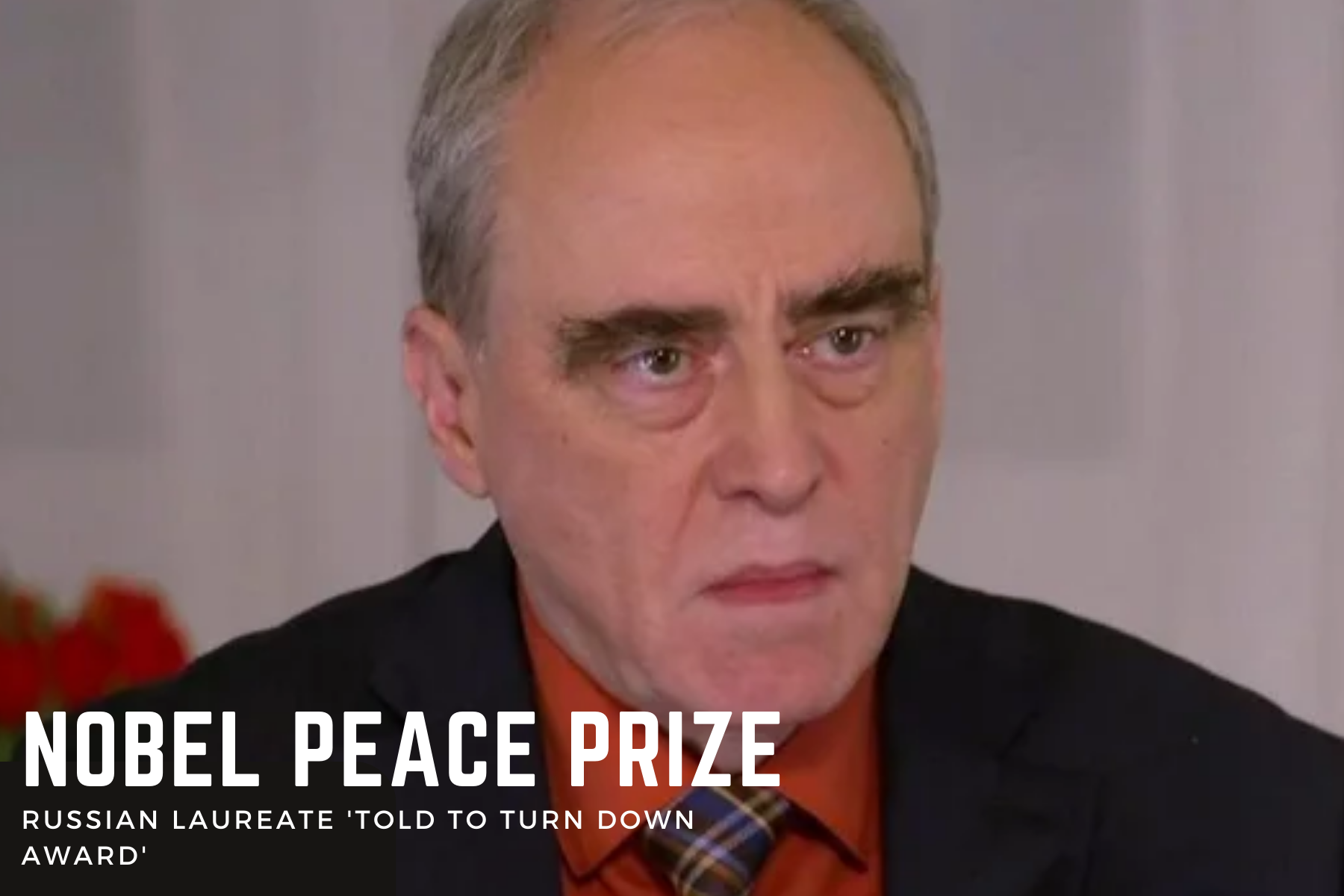
Yan Rachinsky, the president of Memorial and Russian laureate 'told to turn down award'. A Ukrainian human rights organization and a jailed Belarusian rights defender were seen as "inappropriate."
The Russian authorities disbanded Memorial in 2016, putting an end to one of the nation's most established civil rights organizations.
BBC HARDtalk Interview With Yan Rachinsky
Video unavailable
This video is unavailable: Original link to video
In an exclusive interview with the BBC show HARDtalk, Mr. Rachinsky said that his group had been told to turn down the award, but "of course, we didn't listen to this advice."
Even though his safety was in danger, Mr. Rachinsky said that Memorial's work was still important. He said:
“„In today's Russia, no-one's personal safety can be guaranteed. Yes, many have been killed. But we know what impunity of the state leads to… We need to get out of this pit somehow.- Mr. Rachinsky
Memorial has documented historical Soviet repression.
Its first leader, Arseny Roginsky, was sent to a Soviet work camp for studying historyin a way that was thought to be "anti-communist."
The Nobel Committee said, when announcing the winners, that Memorial was founded on the idea that "confronting past crimes is essential in preventing new ones."
Mr. Rachinsky said it was "remarkable" that the committee chose to give the prize to people in three different countries.
He said it showed "that civil society is not divided by national borders, that it is a single body working to solve common problems."
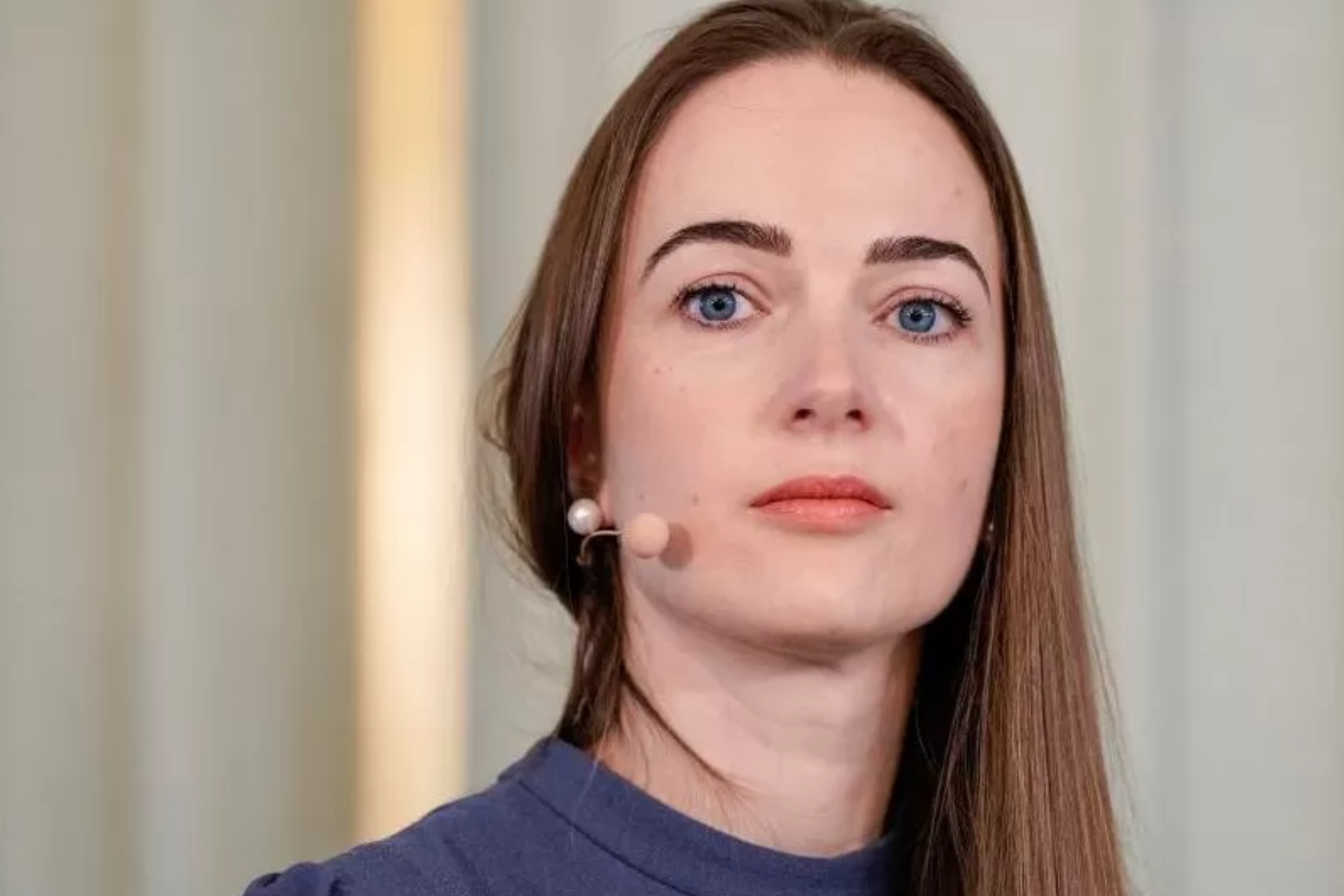
But the decision to give a gift to a Russian person has caused a lot of debate.
Another prizewinner, the woman who runs Ukraine's Center for Civil Liberties, refused to be interviewed with Mr. Rachinsky. The BBC talked to each of them on their own in Oslo.
Oleksandra Matviichuk told HARDtalk that she wanted to do the interview separately.
“„Now we are at war and we want to make the voice of Ukrainian human rights defenders tangible. So I am sure that regardless that we are doing separate interviews, we transmit and deliver the same messages.- Oleksandra Matviichuk
The Center for Civil Liberties was given an award for its work promoting democracy in Ukraine and looking into alleged Russian war crimes in that country.
Even though she didn't want to talk at the same time as her co-winner, Ms. Matviichuk praised Mr. Rachinsky's work and called Memorial "our partner."
She said that Memorial had helped the Ukrainian group for years and that she had "huge respect for all [her] Russian human rights colleagues" who worked in hard conditions.
In addition to this, she stated that peace would not come to Eastern Europe until Russia was made to answer for the crimes that it had committed.
Ms. Matviichuk said that the existing legal framework is insufficient and advocated for the establishment of a new international court to hold President Vladimir Putin and other Russian officials accountable for their activities in Ukraine. She asked:
“„The question is, who will provide justice for hundreds of thousands of victims of the war crimes?- Ms. Matviichuk
She also said that Russia was using the war to reach its geopolitical goals and was committing war crimes to win the war.
Ales Bialiatski, a human rights activist from Belarus who won the third Nobel Peace Prize, has been in jail in his home country since July of last year without being tried.
He started the Viasna (Spring) Human Rights Centre in Belarus in 1996, after the country's authoritarian leader Alexander Lukashenko brutally put down street protests.
Mr. Bialiatski was in prison for three years and was let out in 2014.
Ms. Matviichuk said that her co-winner was "an extremely brave person, so he will continue this battle even in prison."
The History - How Many People Have Turned Down A Nobel Peace Prize?
Even though the Nobel Prize is often regarded as one of the highest honors in the world, at least two previous recipients have chosen to turn down the accolade. Jean-Paul Sartre, who turned down all official honors, including the literature prize in 1964, did not receive the medal.
In 1974, he was joined by Le Duc Tho, who, along with Henry Kissinger, shared the peace award for their work to end the Vietnam War. Le Duc Tho and Henry Kissinger both worked to bring an end to the conflict.
Suleman Shah
Author
Suleman Shah is a researcher and freelance writer. As a researcher, he has worked with MNS University of Agriculture, Multan (Pakistan) and Texas A & M University (USA). He regularly writes science articles and blogs for science news website immersse.com and open access publishers OA Publishing London and Scientific Times. He loves to keep himself updated on scientific developments and convert these developments into everyday language to update the readers about the developments in the scientific era. His primary research focus is Plant sciences, and he contributed to this field by publishing his research in scientific journals and presenting his work at many Conferences.
Shah graduated from the University of Agriculture Faisalabad (Pakistan) and started his professional carrier with Jaffer Agro Services and later with the Agriculture Department of the Government of Pakistan. His research interest compelled and attracted him to proceed with his carrier in Plant sciences research. So, he started his Ph.D. in Soil Science at MNS University of Agriculture Multan (Pakistan). Later, he started working as a visiting scholar with Texas A&M University (USA).
Shah’s experience with big Open Excess publishers like Springers, Frontiers, MDPI, etc., testified to his belief in Open Access as a barrier-removing mechanism between researchers and the readers of their research. Shah believes that Open Access is revolutionizing the publication process and benefitting research in all fields.
Han Ju
Reviewer
Hello! I'm Han Ju, the heart behind World Wide Journals. My life is a unique tapestry woven from the threads of news, spirituality, and science, enriched by melodies from my guitar. Raised amidst tales of the ancient and the arcane, I developed a keen eye for the stories that truly matter. Through my work, I seek to bridge the seen with the unseen, marrying the rigor of science with the depth of spirituality.
Each article at World Wide Journals is a piece of this ongoing quest, blending analysis with personal reflection. Whether exploring quantum frontiers or strumming chords under the stars, my aim is to inspire and provoke thought, inviting you into a world where every discovery is a note in the grand symphony of existence.
Welcome aboard this journey of insight and exploration, where curiosity leads and music guides.
Latest Articles
Popular Articles