15 Life-Changing Sober Living Tips Every Beginner Needs
Sober living is a journey, and for beginners, the right advice can make all the difference. Here are the tips you need.
Author:Suleman ShahReviewer:Han JuNov 03, 20246K Shares501K Views

Beginning a sober lifestyle is one of the most transformative decisions you can make. This journey requires determination, a solid plan, and the right tools to overcome challenges. Whether you're newly sober or seeking ways to maintain your sobriety, the following tips are designed to help you build a fulfilling, substance-free life.
Understanding Sober Living
Living sober goes beyond just quitting alcohol or drugs; it’s about redefining your life in a way that prioritizes health, stability, and happiness. The road to recovery is filled with both challenges and rewards. It's essential to embrace each step, knowing that with commitment and the right strategies, a vibrant and sober life is entirely within reach.
Essential Sober Living Tips For Beginners
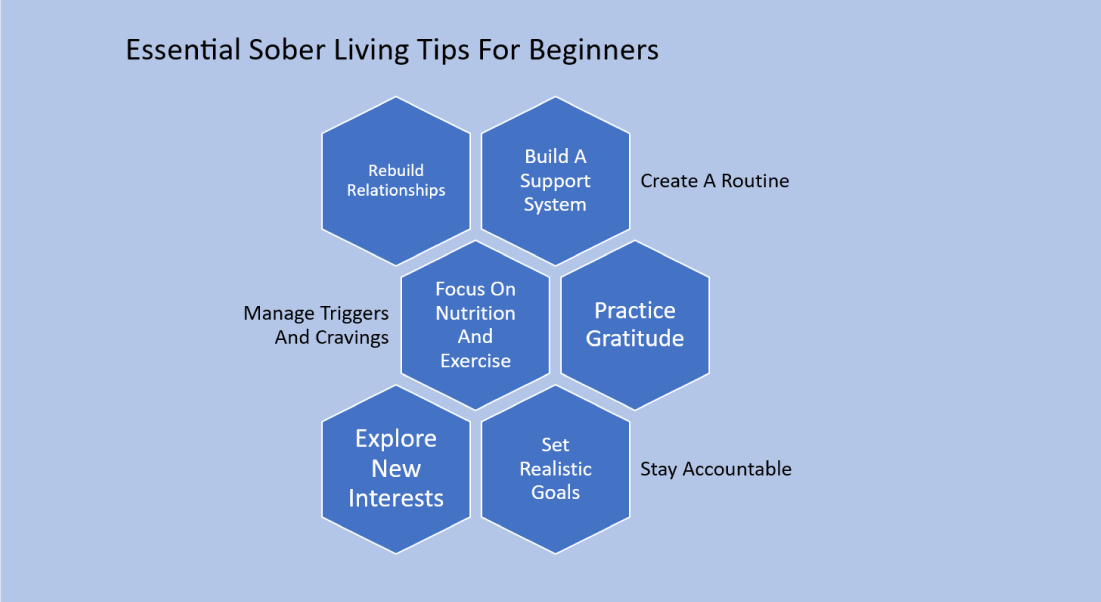
1. Build A Support System
Creating a strong support network is foundational to your recovery. Here’s how you can build one:
- Engage with Friends and Family:Open up to loved ones who respect and support your decision.
- Join Support Groups:Groups like AA or NAprovide community and understanding from those who have walked in your shoes.
- Consider Sober Living Homes:These environments offer structure and accountability, especially useful in the early stages.
2. Create A Routine
A structured routine can provide the stability you need. Here’s how to start:
- Morning Ritual:Begin your day with activities that set a positive tone, such as meditation, exercise, or reading.
- Daily Schedule:Plan out your day, including meals, work, hobbies, and rest, to reduce idle time and stress.
- Evening Wind-Down:Establish a relaxing evening routine that helps you unwind and prepare for restful sleep.
3. Focus On Nutrition And Exercise
Your physical health directly influences your mental well-being. Prioritize it with these steps:
- Balanced Diet:Incorporate plenty of fruits, vegetables, lean proteins, and whole grains.
- Regular Exercise:Aim for at least 30 minutes of physical activity daily, whether it’s walking, yoga, or strength training.
- Stay Hydrated:Drink plenty of water throughout the day to keep your body and mind functioning optimally.
4. Manage Triggers And Cravings
Understanding your triggers is key to managing them. Here’s how to cope:
- Identify Triggers:Common triggers include stress, certain social settings, or specific people. Make a list of yours.
- Develop Strategies:Use techniques like deep breathing, distraction, or contacting a support person to manage cravings.
- Avoid Risky Situations:In early recovery, steer clear of environments where you may be tempted to use substances.
5. Develop Healthy Coping Mechanisms
Replacing harmful habits with healthy ones is essential. Consider these methods:
- Mindfulness Practices:Engage in activities like meditation or deep breathing to stay grounded.
- Creative Outlets:Channel emotions through art, writing, or music.
- Physical Activity:Exercise can be a great way to manage stress and boost mood.
6. Set Realistic Goals
Setting achievable goals keeps you motivated. Follow these steps:
- Start Small:Focus on daily or weekly goals that are easily attainable.
- Celebrate Milestones:Recognize and reward yourself for reaching key milestones in your recovery.
- Keep a Long-Term Vision:While focusing on short-term goals, remember your ultimate goal of a healthy, sober life.
7. Stay Accountable
Accountability is crucial for long-term success. Here’s how to ensure it:
- Find an Accountability Partner:This could be a mentor, a friend, or someone from a support group.
- Track Your Progress:Use a journal or an app to log your achievements and challenges.
- Regular Check-Ins:Schedule regular meetings or calls with your accountability partner to discuss your progress.
8. Seek Professional Help When Needed
Professional guidance can be a game-changer. Consider these options:
- Therapy:Individual or group therapy can provide tools and support tailored to your needs.
- Medical Support:Consult with a healthcare provider to address any physical or mental healthconcerns.
- Counseling:Professional counseling can help you navigate emotional challenges and develop coping strategies.
9. Educate Yourself About Addiction
Knowledge is power. Empower yourself by learning more:
- Read Books and Articles:Educate yourself on the scienceand psychology of addiction.
- Watch Documentaries:Visual resources can provide insight and inspiration.
- Participate in Workshops:Attend seminars or workshops that focus on addiction recovery.
10. Avoid Complacency
Complacency can lead to relapse. Stay vigilant with these tips:
- Continuous Self-Reflection:Regularly assess your progress and areas for improvement.
- Challenge Yourself:Set new goals and push yourself to grow.
- Stay Connected:Regular interaction with your support network keeps you grounded and focused.
11. Rebuild Relationships
Healing relationships is a crucial part of recovery. Here’s how:
- Open Communication:Be honest and open with loved ones about your journey.
- Apologize and Make Amends:Acknowledge past mistakes and express your commitment to change.
- Consistency:Show through your actions that you are committed to sobriety and rebuilding trust.
12. Practice Gratitude
Gratitude can shift your perspective and boost your mental health:
- Gratitude Journal:Write down three things you’re grateful for each day.
- Express Thanks:Regularly thank those who support you.
- Focus on Positives:When faced with challenges, try to find the silver lining.
13. Explore New Interests
New hobbies can help you fill the void left by old habits:
- Try Something New:Whether it’s painting, hiking, or cooking, find activities that excite you.
- Join a Class or Group:Engage with otherswho share your interests, building new friendships along the way.
- Stay Curious:Keep exploring until you find what truly brings you joy.
14. Volunteer Or Give Back
Helping others reinforces your commitment to sobriety:
- Find Volunteer Opportunities:Look for local organizations or events where you can contribute your time and skills.
- Support Fellow Recovering Individuals:Share your experiences and offer support to those new to recovery.
- Community Involvement:Engaging with your community can provide a sense of purpose and belonging.
15. Plan For Social Situations
Social events don’t have to be a challenge with the right preparation:
- Bring Your Own Beverage:Carry a non-alcoholic drink to avoid any pressure to drink.
- Set Boundaries:Don’t be afraid to say no or leave if you’re uncomfortable.
- Have an Exit Strategy:Plan how you’ll leave if the situation becomes too challenging.
FAQs About Sober Living For Beginners
How Can I Find The Right Support Group?
Look for groups that align with your values and needs. Test out a few different options to find the one that feels right. Online forums can also be a good resource if in-person groups are not accessible.
What Should I Do If I Relapse?
Reach out for help immediately, whether it's to a friend, counselor, or support group. Reflect on what triggered the relapse and take steps to strengthen your coping strategies.
How Can I Manage Social Situations While Staying Sober?
Plan ahead and have strategies in place, such as bringing a sober friend along or having a pre-prepared response if offered a drink. Focus on enjoying the event without substances.
What Are Some Healthy Hobbies To Replace Old Habits?
Consider hobbies that engage both mind and body, like exercise, cooking, or learning a new skill. Creative pursuits like painting or writing can also provide a healthy emotional outlet.
How Do I Stay Motivated During Tough Times?
Stay connected to your support system, break your goals into smaller, manageable tasks, and regularly remind yourself of the benefits of sobriety. Practicing self-care and rewarding yourself for progress can also help maintain motivation.
What Resources Are Available For Learning About Addiction?
Books, documentaries, and online courses are great starting points. Websites like the National Institute on Drug Abuse (NIDA) and Substance Abuse and Mental Health Services Administration (SAMHSA) offer comprehensive resources.
How Can I Rebuild Trust With Loved Ones?
Consistency and honesty are key. Take responsibility for past actions and demonstrate your commitment to change through your behavior. Over time, trust can be rebuilt with patience and persistence.
Conclusion
Choosing a sober life is a profound and rewarding journey. Each step forward, no matter how small, is a victory. With the right support, tools, and mindset, you can overcome challenges and build a life of health, happiness, and fulfillment. Remember, sobriety is not just about what you give up, but also about what you gain—a clearer mind, healthier relationships, and a more meaningful life.

Suleman Shah
Author
Suleman Shah is a researcher and freelance writer. As a researcher, he has worked with MNS University of Agriculture, Multan (Pakistan) and Texas A & M University (USA). He regularly writes science articles and blogs for science news website immersse.com and open access publishers OA Publishing London and Scientific Times. He loves to keep himself updated on scientific developments and convert these developments into everyday language to update the readers about the developments in the scientific era. His primary research focus is Plant sciences, and he contributed to this field by publishing his research in scientific journals and presenting his work at many Conferences.
Shah graduated from the University of Agriculture Faisalabad (Pakistan) and started his professional carrier with Jaffer Agro Services and later with the Agriculture Department of the Government of Pakistan. His research interest compelled and attracted him to proceed with his carrier in Plant sciences research. So, he started his Ph.D. in Soil Science at MNS University of Agriculture Multan (Pakistan). Later, he started working as a visiting scholar with Texas A&M University (USA).
Shah’s experience with big Open Excess publishers like Springers, Frontiers, MDPI, etc., testified to his belief in Open Access as a barrier-removing mechanism between researchers and the readers of their research. Shah believes that Open Access is revolutionizing the publication process and benefitting research in all fields.

Han Ju
Reviewer
Hello! I'm Han Ju, the heart behind World Wide Journals. My life is a unique tapestry woven from the threads of news, spirituality, and science, enriched by melodies from my guitar. Raised amidst tales of the ancient and the arcane, I developed a keen eye for the stories that truly matter. Through my work, I seek to bridge the seen with the unseen, marrying the rigor of science with the depth of spirituality.
Each article at World Wide Journals is a piece of this ongoing quest, blending analysis with personal reflection. Whether exploring quantum frontiers or strumming chords under the stars, my aim is to inspire and provoke thought, inviting you into a world where every discovery is a note in the grand symphony of existence.
Welcome aboard this journey of insight and exploration, where curiosity leads and music guides.
Latest Articles
Popular Articles