The Role Of Swipe Culture In Fueling Bad Dating Behavior
Tinder introduced the concept of swiping: left when you’re not interested, right if you think the person could be a good match. As of 2024, the dating app has amassed a global user base of 100 million active users, 75 million monthly users, and 42 million daily users.
Author:Suleman ShahReviewer:Han JuNov 12, 2024
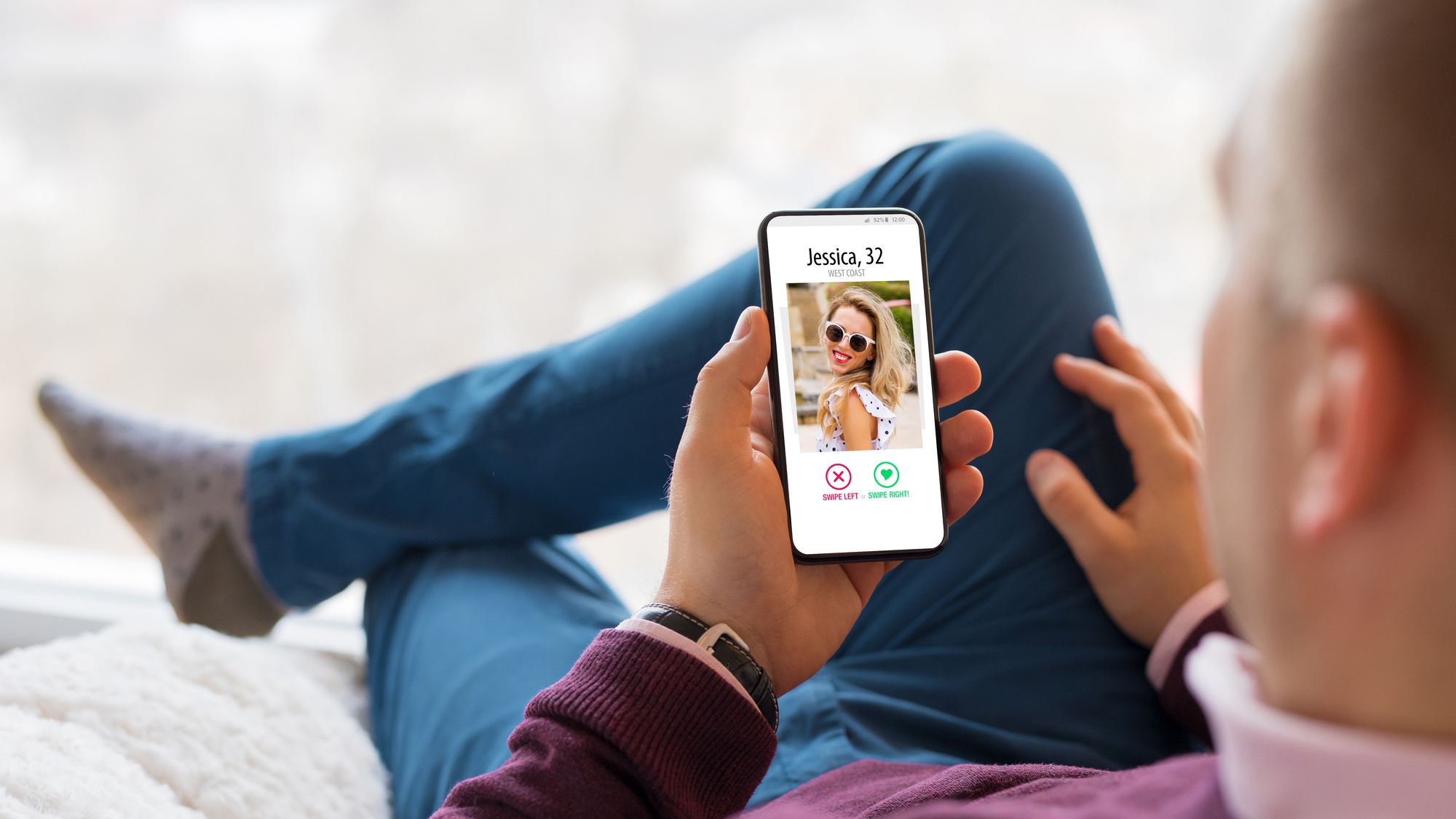
Swiping patterns mislead dating app algorithms, which might end up matching users with rude, superficial, disinterested, or overly eager people over and over again. Here’s how they can protect themselves.
Tinder introduced the concept of swiping: left when you’re not interested, right if you think the person could be a good match. As of 2024, the dating app has amassed a global user base of 100 million active users, 75 million monthly users, and 42 million daily users. They are all active, logging into the app 4-5 times per day on average.
How Swiping Patterns Mislead Dating App Algorithms
The metrics used to determine Tinder and other apps’ algorithms can be based on how many messages users send their matches, the number of likes or matches a profile gets, or whether people exchange phone numbers.
Algorithms can’t determine what motivates specific behavior. Let’s say two users match, but one ends up offending the other somehow. Eventually, one blocks or unmatches the other. The algorithm sees a series of messages between two people and nothing more. It doesn’t understand the root cause of communication breakdown or why one person is unmatched with the other. All the algorithm saw was two individuals communicating.
Based on that, could the algorithm consider that communication as insight into a user’s “type?” Possibly, which explains why some dating app users constantly match with people who tend to make careless or rude comments. What about those who swipe right without looking at the profile, unmatching with the user soon thereafter? Could the algorithm start showing them profiles of other people who swipe inattentively?
Swipe culture has contributed to the rise of so-called serial dating. Serial daters move from relationship to relationship without making a long-term commitment. They love the proverbial “thrill of the chase.” Someone might date several people in the same week, hiding their true intentions.
Countering Swipe Culture
It’s possible to mitigate swipe culture’s negative effects. The first approach entails reading the whole profile before swiping. If one unmatches very often, the algorithm might consider their activity suspicious and suppress their profile’s visibility. You want the algorithm to perceive you as careful and thorough and try to match you with similar people.
According to a study reported by Time Magazine in 2023, most partners share up to 89% of traits and inclinations, such as alcohol consumption, extraversion or introversion, IQ, political values, level of education, proneness to depression, openness to experience, the age at which each person became sexually active, etc.
Don’t Exchange Contact Info Immediately
Spend some time establishing rapport with a user before you agree to take communication off the platform. People that jump to give or ask for a phone number can be perceived as too eager, scammers, or trying to test your boundaries. The algorithm should understand selective and cautious behavior.
Don’t Be On The Platform For Too Long
Different people have different thresholds for how long they’re comfortable communicating on dating apps, including when to provide contact information or meet in real life. However, delaying the process excessively is not reasonable, as the algorithm might think you’re looking for people who message often without asking you out.
Don’t Unmatch, Block
If a match says or does something that puts you off, block them. Algorithms flag profiles that are blocked by a lot of users.
Ignore Profiles With Nothing But A Hot Photo
Everyone is tempted by good looks, which is why attractive people don’t bother making an effort. Swiping right on an empty profile indicates that a user’s standards are low. Manipulative or controlling people might use that to their advantage.
This isn’t to say physical attraction should be ignored or underestimated as a factor predicting compatibility. 47% of Americans in a romantic relationship believe they are as attractive as their partner. 52% of women hold this belief, compared to 41% of men.
37% of men think their partner is more attractive than them, compared to just 14% of women. Finally, 17% of women and 12% of men think they are more attractive.

Suleman Shah
Author
Suleman Shah is a researcher and freelance writer. As a researcher, he has worked with MNS University of Agriculture, Multan (Pakistan) and Texas A & M University (USA). He regularly writes science articles and blogs for science news website immersse.com and open access publishers OA Publishing London and Scientific Times. He loves to keep himself updated on scientific developments and convert these developments into everyday language to update the readers about the developments in the scientific era. His primary research focus is Plant sciences, and he contributed to this field by publishing his research in scientific journals and presenting his work at many Conferences.
Shah graduated from the University of Agriculture Faisalabad (Pakistan) and started his professional carrier with Jaffer Agro Services and later with the Agriculture Department of the Government of Pakistan. His research interest compelled and attracted him to proceed with his carrier in Plant sciences research. So, he started his Ph.D. in Soil Science at MNS University of Agriculture Multan (Pakistan). Later, he started working as a visiting scholar with Texas A&M University (USA).
Shah’s experience with big Open Excess publishers like Springers, Frontiers, MDPI, etc., testified to his belief in Open Access as a barrier-removing mechanism between researchers and the readers of their research. Shah believes that Open Access is revolutionizing the publication process and benefitting research in all fields.

Han Ju
Reviewer
Hello! I'm Han Ju, the heart behind World Wide Journals. My life is a unique tapestry woven from the threads of news, spirituality, and science, enriched by melodies from my guitar. Raised amidst tales of the ancient and the arcane, I developed a keen eye for the stories that truly matter. Through my work, I seek to bridge the seen with the unseen, marrying the rigor of science with the depth of spirituality.
Each article at World Wide Journals is a piece of this ongoing quest, blending analysis with personal reflection. Whether exploring quantum frontiers or strumming chords under the stars, my aim is to inspire and provoke thought, inviting you into a world where every discovery is a note in the grand symphony of existence.
Welcome aboard this journey of insight and exploration, where curiosity leads and music guides.
Latest Articles
Popular Articles