US Prepares Temporary Gaza Cease-Fire Resolution
In the latest diplomatic efforts to address the escalating crisis in Gaza, US prepares Gaza cease-fire resolution in the United Nations, emphasizing a temporary cease-fire to be implemented "as soon as practicable."
Author:Suleman ShahReviewer:Han JuFeb 21, 2024

In the latest diplomatic efforts to address the escalating crisis in Gaza, US prepares Gaza cease-fire resolutionin the United Nations, emphasizing a temporary cease-fire to be implemented "as soon as practicable." The draft, obtained by The New York Times, warns against Israel's potential invasion of a southern Gaza area that has witnessed a significant exodus of residents.
Ahead of a Tuesday vote on a distinctU.N. resolution backed by the Arabbloc and demanding an immediate humanitarian cease-fire in Gaza, this is an unexpected development.
The United States has declared its intention to veto this resolution because it could potentially disrupt ongoing negotiations between the belligerent factions regarding a ceasefire for a minimum of six weeks and the release of all hostages captured during Hamas' unexpected assault in southern Israel on October 7.
Competing with this initiative is a resolution expected to be presented by Algeria on Tuesday, advocating for an immediate cease-fire. The U.S. proposal supports a temporary cease-fire in Gaza, conditional on the release of all hostages, and urges the removal of restrictions on humanitarian aid delivery.
In a statement to reporters, U.S. Deputy Ambassador Robert Wood criticized the Arab-backed resolution, asserting it is not an "effective mechanism" to achieve the desired outcomes of hostage release, increased aid, and a prolonged cessation of hostilities. Wood added:
“„What we're looking at is another possible option.- Robert Wood
The U.S. draft resolution delivers a stern message to Israel, cautioning against a major ground offensive in Rafah under current circumstances. It further warns that any additional displacement of civilians, potentially into neighboring countries like Egypt, could have severe implications for regional peace and security.
Regarding the possibility of a U.S. veto, Wood expressed uncertainty about immediate developments, stating, "I don't think you can expect anything to happen tomorrow."If the U.S. vetoes the resolution, the Arab Group may take their proposal to the U.N. General Assembly, where approval is likely, though assembly resolutions lack legally binding force.
The Security Council is anticipated to engage in discussions about the U.S. draft resolution, which, for the first time, condemns not only Hamas' October 7 attack but also its acts of hostage-taking, murder, and sexual violence, including rape. This marks a departure from previous resolutions that omitted condemnation of Hamas.
While not explicitly naming Israel, the U.S. draft condemns calls for the resettlement of Gaza by government ministers and rejects any attempts at demographic or territorial changes violating international law.
Final Words
In a new draft resolution for the United Nations Security Council, the United States proposes a temporary cessation of hostilities between Israel and Hamas. As per the proposed resolution, a "temporary ceasefire in Gaza as soon as practicable" and the prompt liberation of the 134 captives still being held by terrorist organizations, potentially including civilians in Gaza, are demanded.
The draft proposal follows President Biden's statement that during their most recent phone conversation, he instructed Prime Minister Benjamin Netanyahu to "establish a temporary ceasefire."
Jump to
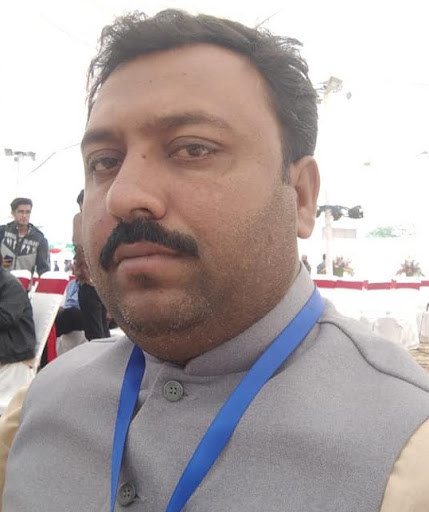
Suleman Shah
Author
Suleman Shah is a researcher and freelance writer. As a researcher, he has worked with MNS University of Agriculture, Multan (Pakistan) and Texas A & M University (USA). He regularly writes science articles and blogs for science news website immersse.com and open access publishers OA Publishing London and Scientific Times. He loves to keep himself updated on scientific developments and convert these developments into everyday language to update the readers about the developments in the scientific era. His primary research focus is Plant sciences, and he contributed to this field by publishing his research in scientific journals and presenting his work at many Conferences.
Shah graduated from the University of Agriculture Faisalabad (Pakistan) and started his professional carrier with Jaffer Agro Services and later with the Agriculture Department of the Government of Pakistan. His research interest compelled and attracted him to proceed with his carrier in Plant sciences research. So, he started his Ph.D. in Soil Science at MNS University of Agriculture Multan (Pakistan). Later, he started working as a visiting scholar with Texas A&M University (USA).
Shah’s experience with big Open Excess publishers like Springers, Frontiers, MDPI, etc., testified to his belief in Open Access as a barrier-removing mechanism between researchers and the readers of their research. Shah believes that Open Access is revolutionizing the publication process and benefitting research in all fields.

Han Ju
Reviewer
Hello! I'm Han Ju, the heart behind World Wide Journals. My life is a unique tapestry woven from the threads of news, spirituality, and science, enriched by melodies from my guitar. Raised amidst tales of the ancient and the arcane, I developed a keen eye for the stories that truly matter. Through my work, I seek to bridge the seen with the unseen, marrying the rigor of science with the depth of spirituality.
Each article at World Wide Journals is a piece of this ongoing quest, blending analysis with personal reflection. Whether exploring quantum frontiers or strumming chords under the stars, my aim is to inspire and provoke thought, inviting you into a world where every discovery is a note in the grand symphony of existence.
Welcome aboard this journey of insight and exploration, where curiosity leads and music guides.
Latest Articles
Popular Articles