Dr. Vardan Khachatrian: Why Some Surgical Scars Heal Better Than Others
According to Dr. Vardan Khachatrian, Head of Plastic Surgery at Valiant Clinic in Dubai, scar formation should be viewed as a mechanical and physiological process rather than a purely cosmetic outcome.
Author:Suleman ShahReviewer:Han JuFeb 25, 2026
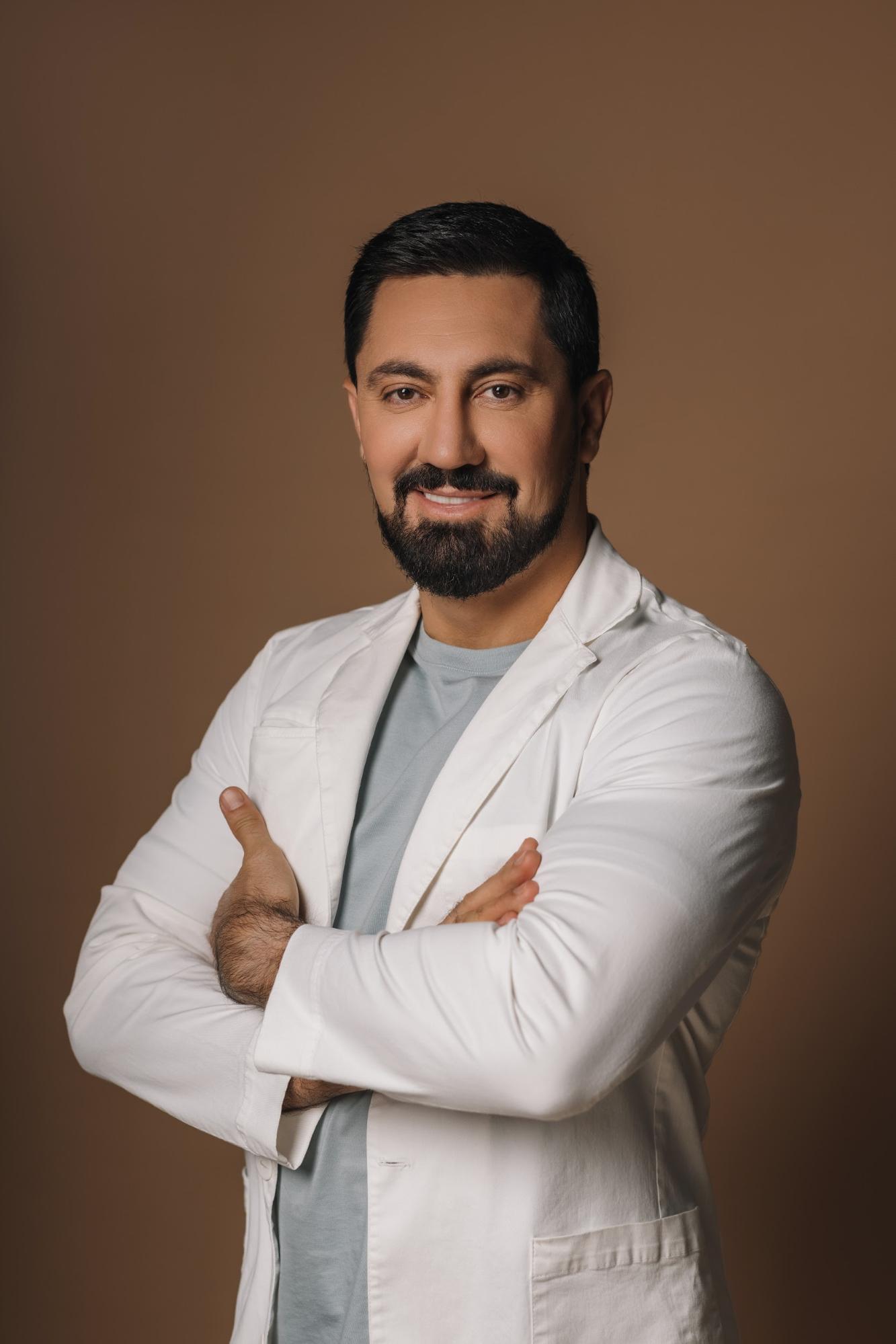
According to Dr. Vardan Khachatrian, Head of Plastic Surgery at Valiant Clinic in Dubai, scar formation should be viewed as a mechanical and physiological process rather than a purely cosmetic outcome. With more than two decades of surgical experience — and a practice where a significant proportion of cases involve complex revision procedures — he approaches scar management as a structural discipline.
“Every scar tells you how the tissue was treated,” he explains. “The body responds to tension, blood supply, and trauma. Our role is to control those variables.”
Understanding why some scars heal as fine, discreet lines while others widen or thicken requires examining the biology beneath the surface.
The Biology Of Healing
When skin is incised, the body activates a carefully regulated healing cascade that unfolds in three phases: inflammation, proliferation, and remodeling.
During inflammation, immune cells migrate to the wound site and prepare tissue for repair. In the proliferative phase, fibroblasts produce collagen to rebuild structural integrity. The final remodeling phase, which may continue for up to 18 months, determines the scar’s long-term appearance.
Collagen fibers do not organize randomly. They align in response to mechanical forces. Excessive tension across a wound stimulates increased collagen deposition, which can lead to thicker or widened scars.
“In surgical healing, tension is biology’s steering wheel,” explains Dr. Vardan Khachatrian. “If you control mechanical stress at closure, you influence how collagen will organize months later.”
This principle underpins his Ultra-Thin Seam approach — a tension-controlled, multi-layer closure method designed to minimize superficial strain while preserving vascular supply. By stabilizing deeper structures before final skin approximation, the technique supports more predictable collagen remodeling and refined scar formation over time.
In aesthetic surgery — particularly in breast and body procedures where tissue is subject to constant movement — understanding how tension behaves during healing is not cosmetic theory; it is structural science.
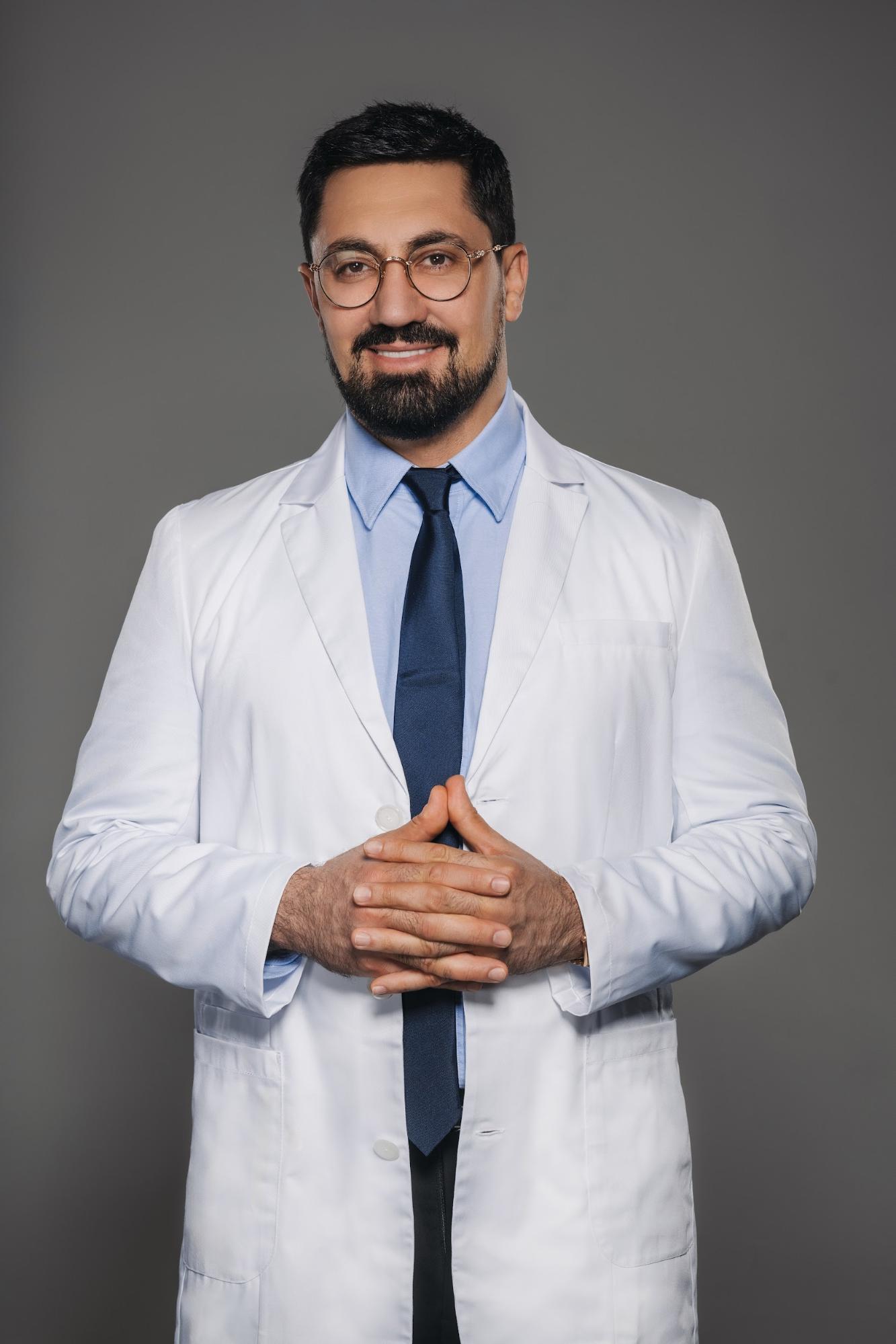
Mechanical Tension: The Hidden Determinant
One of the most decisive factors influencing scar outcome is tissue tension at closure.
Areas such as the breast, abdomen, and shoulder are subject to constant movement and gravitational forces. If tension is concentrated at the skin level, the scar may gradually widen as the tissue attempts to redistribute load.
In high-complexity revision cases — where tissue has already been altered by previous surgery — this dynamic becomes even more pronounced. Scar tissue behaves differently from native tissue. It has memory, density variation, and altered elasticity.
For this reason, Dr. Vardan Khachatrian emphasizes deep structural stabilization before superficial closure. By redistributing load internally, the skin is allowed to heal under reduced mechanical stress.
This layered approach has become central in advanced mastopexy and secondary reconstruction procedures attracting patients from across the globe.
Vascular Integrity and Tissue Handling
Scar quality is also closely linked to microvascular preservation.
When tissue is handled gently and blood supply is maintained, inflammatory response remains controlled. Excessive traction, prolonged exposure, or mechanical trauma during surgery may compromise circulation, increasing the likelihood of irregular collagen deposition.
In refined surgical environments — particularly within Dubai’s tightly regulated medical framework — tissue preservation is considered a standard of care rather than a preference.
“In complex procedures, restraint matters as much as precision,” Dr. Vardan Khachatrian notes. “Aggressive handling often creates problems that appear months later.”
Individual Healing Variability
No discussion of scar science is complete without acknowledging biological variability.
Genetics, hormonal profile, skin thickness, age, metabolic health, and postoperative compliance all influence collagen behavior. Some individuals are predisposed to hypertrophic or keloid scarring regardless of surgical technique.
However, technique still significantly influences outcome. Controlled tension, vascular preservation, and multi-layer closure reduce unnecessary biological stress and support more predictable remodeling.
Scar Refinement In Complex And Revision Surgery
Scar management becomes particularly critical in revision procedures — an area where Dr. Vardan Khachatrian’s practice is heavily concentrated.
Secondary surgery requires working within previously operated tissue planes. Capsule formation, altered blood supply, and compromised elasticity demand careful recalibration of closure strategy.
In such cases, superficial suturing alone is insufficient. Structural correction beneath the skin must precede aesthetic refinement.
Scar optimization in this context is biomechanical planning.
Maturation And Long-Term Outcomes
Scar remodeling continues long after the incision appears healed. Protection from sun exposure, controlled movement during early recovery, and adherence to postoperative protocols influence final refinement.
No surgical method eliminates scarring entirely. The objective is controlled healing — where the scar integrates harmoniously with surrounding anatomy.
From a structural perspective, scar quality reflects the interaction between biology and surgical judgment.
“In aesthetic surgery, the most refined results often begin with what the patient does not see,” Dr. Vardan Khachatrian says. “Internal stability determines surface elegance.”

Suleman Shah
Author
Suleman Shah is a researcher and freelance writer. As a researcher, he has worked with MNS University of Agriculture, Multan (Pakistan) and Texas A & M University (USA). He regularly writes science articles and blogs for science news website immersse.com and open access publishers OA Publishing London and Scientific Times. He loves to keep himself updated on scientific developments and convert these developments into everyday language to update the readers about the developments in the scientific era. His primary research focus is Plant sciences, and he contributed to this field by publishing his research in scientific journals and presenting his work at many Conferences.
Shah graduated from the University of Agriculture Faisalabad (Pakistan) and started his professional carrier with Jaffer Agro Services and later with the Agriculture Department of the Government of Pakistan. His research interest compelled and attracted him to proceed with his carrier in Plant sciences research. So, he started his Ph.D. in Soil Science at MNS University of Agriculture Multan (Pakistan). Later, he started working as a visiting scholar with Texas A&M University (USA).
Shah’s experience with big Open Excess publishers like Springers, Frontiers, MDPI, etc., testified to his belief in Open Access as a barrier-removing mechanism between researchers and the readers of their research. Shah believes that Open Access is revolutionizing the publication process and benefitting research in all fields.

Han Ju
Reviewer
Hello! I'm Han Ju, the heart behind World Wide Journals. My life is a unique tapestry woven from the threads of news, spirituality, and science, enriched by melodies from my guitar. Raised amidst tales of the ancient and the arcane, I developed a keen eye for the stories that truly matter. Through my work, I seek to bridge the seen with the unseen, marrying the rigor of science with the depth of spirituality.
Each article at World Wide Journals is a piece of this ongoing quest, blending analysis with personal reflection. Whether exploring quantum frontiers or strumming chords under the stars, my aim is to inspire and provoke thought, inviting you into a world where every discovery is a note in the grand symphony of existence.
Welcome aboard this journey of insight and exploration, where curiosity leads and music guides.
Latest Articles
Popular Articles