Benefits Of Piano For The Brain | Does It Help Adults And Seniors Too?
Understanding the benefits of piano for the brain starts with understanding what makes piano unique. Unlike many hobbies, piano trains both hands independently while the brain tracks notes, sound, and timing in real time.
Author:Suleman ShahReviewer:Han JuApr 19, 20266.5K Shares163.4K Views

A Few Things Worth Knowing Before You Read On
- Piano simultaneously activates the motor, auditory, and visual cortices, making it one of the most neurologically demanding activities researchers have studied.
- A twin study found that musically engaged individuals had a 64% lower likelihood of developing mild cognitive impairment or dementia compared to their non-musical siblings.
- Benefits are not limited to childhood. Adult beginners show measurable neural changes within 11 weeks of structured practice.
- The research also reveals honest limitations: brain changes from piano practice diminish when practice stops, and certain risks like repetitive strain injury deserve attention alongside the benefits.
- Practical guidance on how much practice the brain actually needs is grounded in clinical research, not guesswork.
A surprising finding sits at the heart of piano neuroscience. When scientists use functional MRI to watch a pianist's brain during play, they do not see one region light up, or even two. They see an extraordinary cascade of activity firing across the motor cortex, auditory cortex, and visual cortex, while the deep connective tissue linking the brain's hemispheres works overtime to coordinate both hands. Researchers describe this level of simultaneous neural engagement consistently as one of the most complex cognitive tasks the human brain can perform.
This article works through all of it. Drawing on peer-reviewed research in music cognition and neuroplasticity, including studies from the University of Bath, the University of Toronto, and findings published in Twin Research and Human Genetics, the goal is to explain not just what happens to the brain through piano practice, but why it happens, how fast it happens, and what you can reasonably expect at different points in life.
What Happens Inside The Brain When You Play Piano
Most activities recruit one or two brain systems at a time. Reading engages the visual cortex and language centers. Running activates the motor cortex and cardiovascular regulation systems. Piano playing is categorically different, and that difference is the foundation of everything that follows.
The Three Brain Regions Piano Activates Simultaneously
The motor cortex handles the planning and execution of physical movement. When a pianist's fingers move independently across two octaves, the motor cortex is working at a level of precision that few other activities demand. The auditory cortex processes every note played and compares it against the expected sound, running a continuous feedback loop. The visual cortex is simultaneously decoding written notation, tracking position on the page, and feeding that information forward in real time.
What makes the piano neurologically unusual is not that each of these systems activates individually. It is that all three activate together, continuously, and in tight coordination. The brain is not switching between tasks. It is running them in parallel.
How Piano Strengthens The Corpus Callosum
The corpus callosum is a dense band of nerve fibers connecting the brain's left and right hemispheres. It functions as the communication highway between the analytical, sequential left brain and the creative, holistic right brain. Imaging studies have consistently shown that musicians, and pianists in particular, have a measurably thicker and more active corpus callosum than non-musicians.
The reason is mechanical. Playing piano requires the left and right hands to perform completely independent movements simultaneously, often with different rhythms, dynamics, and patterns. The brain cannot default to one dominant side. It has to coordinate both hemispheres continuously.
Over time, that demand physically strengthens the connective tissue responsible for cross-hemisphere communication, which research suggests leads to faster and more diverse problem-solving routes in both academic and social contexts. For readers who want a deeper scientific look at how researchers simulate and interpret neural systems, how generative models are used to study brain dynamicsoffers a useful background.
Why Piano Counts As A Full-Brain Workout
Neuroscientists at Johns Hopkins have described musical performance as a full-body workout for the brain. Unlike single-domain exercises such as crossword puzzles, which primarily engage language and memory centers, or chess, which focuses on strategic reasoning, piano forces the brain to integrate sensory input, motor output, emotional processing, and real-time error correction all at once.
This is what researchers mean by multisensory integration. The brain is not just processing information; it is learning to handle multiple streams of information simultaneously and efficiently. That capacity, once trained, extends well beyond the piano bench.
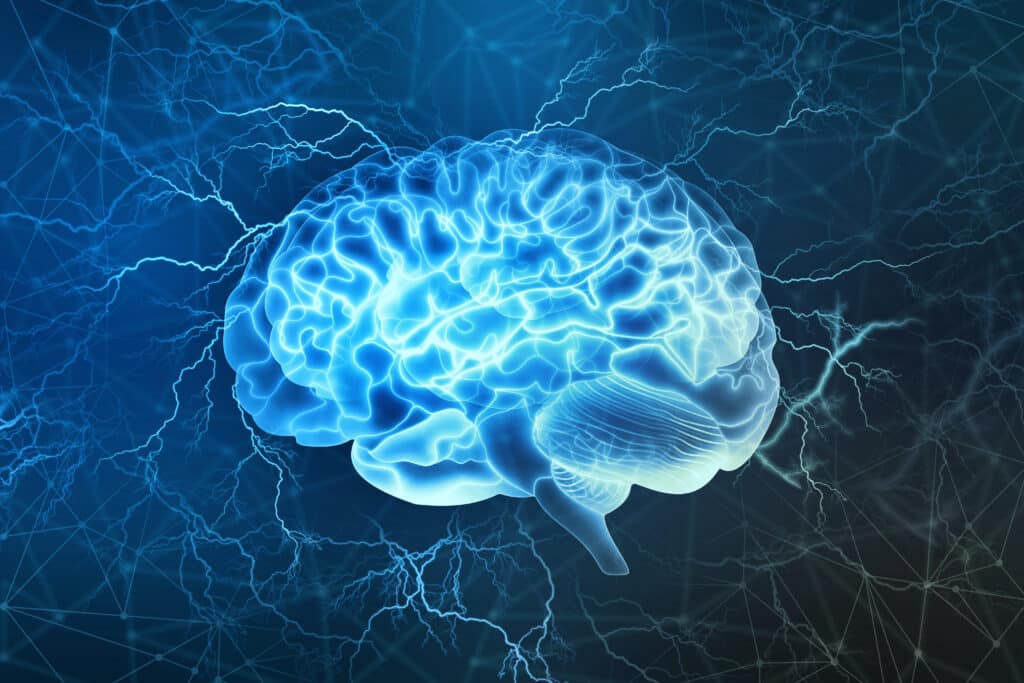
How Piano Rewires The Brain Through Neuroplasticity
Understanding the benefits of piano for the brain starts with one foundational concept: neuroplasticity. Everything else in this topic flows from it.
What Neuroplasticity Actually Means
Neuroplasticity is the brain's ability to reorganize itself by forming new neural connections in response to learning or experience. For decades, scientists believed this capacity was largely limited to childhood. That view has been overturned. Research now demonstrates clearly that the adult brain retains meaningful plasticity throughout life, though the rate and ease of change differ by age.
This matters for piano because every skill practiced at the keyboard, from learning a new fingering pattern to internalizing a rhythm, is an act of neural reorganization. The brain is physically changing as you practice.
What The Research Shows About Structural Brain Changes
Studies using MRI have identified approximately five brain regions that are structurally larger in musicians than in non-musicians. These include areas associated with motor function, auditory processing, memory formation, and emotional regulation. The differences are not subtle. They are visible on brain scans and correlated with years of musical training.
A well-known studyused juggling as a model for adult neuroplasticity and found that adults who learned to juggle showed measurable increases in grey matter in visual and motor areas. Critically, when they stopped practicing, those changes reversed. This finding applies directly to the piano.
The brain adapts in response to consistent practice. It also returns toward baseline when practice stops. Sustaining the benefits requires sustaining the habit, and this is one of the most important honest caveats in this area of research. That is also why it helps to reduce brain-damaging habits that silently harm memory and focus, alongside building positive habits like piano practice.
How Quickly The Brain Begins To Change
Research from the University of Bath, published in Nature Scientific Reportsin 2022, followed 31 adults with no prior musical experience through an 11-week program of one hour of piano lessons per week. Within that short period, participants showed statistically significant improvements in multisensory processing.
Their brains became measurably better at integrating what they saw and heard simultaneously. They also reported meaningful reductions in depression, stress, and anxiety compared to control groups who listened to music or completed homework during the same time.
Eleven weeks. One hour a week. That is a remarkably short investment for measurable neural change in adults, and it sets a practical, realistic floor for what consistent beginners can expect.
The Cognitive Benefits Of Playing Piano
With the neurological foundation established, the specific cognitive outcomes become easier to understand and evaluate.
Memory - Why Pianists Remember More
Piano practice produces some of the most consistently documented memory improvements in music cognition research. One frequently cited study found that children who had several years of piano training could remember 20% more vocabulary words than peers without musical training. The advantage is not limited to children.
The mechanism behind this is worth understanding. Musicians appear to encode memories with multiple simultaneous tags: an auditory tag for how something sounds, a motor tag for how it feels to produce, an emotional tag for the feeling of a passage, and a conceptual tag for where it fits in a larger structure.
A memory with four distinct tags is far easier to retrieve than a memory with one. This multi-tagging effect extends beyond music and helps explain why pianists show stronger recall in non-musical contexts as well.
Executive Function, Focus, And Attention
Executive function covers the cognitive skills responsible for planning, organizing, managing time, and sustaining attention. Musicians consistently demonstrate stronger executive function than non-musicians, and the leading explanation lies in what practicing an instrument actually demands. Learning a new piece requires breaking a complex task into components, maintaining attention over extended periods, self-correcting in real time, and building toward a long-term goal through short daily sessions.
These are not musical skills. They are transferable cognitive skills that piano practice happens to train exceptionally well. Studies have found that children who receive piano lessons demonstrate better sustained focus in academic settings. Adults report improvements in professional concentration and time management that they trace directly to the structured attention demands of practice.
Spatial-Temporal Reasoning And Math
Music is mathematical in a very concrete sense. Reading standard notation requires understanding ratios, fractions, and proportional relationships. A half note lasts twice as long as a quarter note. A triplet divides a beat into three equal parts. This is not metaphorical mathematics; it is actual pattern recognition and proportional reasoning practiced repeatedly and over time.
A nine-month Canadian studyled by Glenn Schellenberg at the University of Toronto found that children who received weekly piano and voice training showed an IQ increase of nearly three points compared to peers who did not receive musical instruction.
The gains were particularly notable in verbal, spatial, and mathematical domains. Schellenberg attributed the effect to the multifaceted nature of piano learning, which simultaneously engages memorization, emotional expression, music theory, and fine motor coordination.
Problem-Solving And Creativity
Strengthened connections between brain hemispheres produce a practical cognitive outcome, which is that the brain gains access to more varied and flexible thinking routes. When a difficult problem arises, a brain with stronger interhemispheric communication can approach it from more angles simultaneously. It is worth being precise here.
Research supports the connection between musical training and creative cognitive flexibility, but isolating creativity as a cleanly measurable outcome is methodologically difficult. The evidence is sufficient to conclude that piano practice supports more flexible thinking.
It does not support the claim that piano lessons produce guaranteed creativity gains in isolation from other factors. For readers who want to see how these abilities show up in real performance, studying famous pianistscan make the link between technical mastery, interpretation, and mental flexibility easier to understand.
Piano And Mental Health
The mental health benefits of piano are among the most consistently replicated findings in this area of research. Several mechanisms are at work, and the studies behind them are specific enough to be worth naming.
- Cortisol reduction:A studysorted college students into groups who played piano, created sculpture, practiced calligraphy, or sat in silence. The piano-playing group showed significantly larger drops in cortisol, the body's primary stress hormone, than any other group, including the other creative activities.
- Dopamine and serotonin release:Playing music activates the brain's reward system, releasing the same neurotransmitters associated with positive mood and motivation. The complexity of piano playing sustains this activation over longer practice sessions than many other pleasurable activities.
- Reduced depression, anxiety, and stress:The University of Bath randomized control trial found that adult beginners who took piano lessons for 11 weeks reported significantly lower scores on depression, anxiety, and stress measures compared to a control group who spent the same time listening to music or doing homework.
- Piano as a therapeutic tool:A 2013 study published in Frontiers in Psychologyfound that structured piano practice had a meaningful impact on depression symptoms in elderly adults. Piano is also widely used as a structured therapeutic intervention for Attention Deficit Hyperactivity Disorder because its rhythmic demands require sustained, focused attention in a format that provides immediate auditory feedback.
One important note belongs here. Piano practice supports mental health and complements treatment. It is not a clinical replacement for therapy or psychiatric care. Research in this area consistently positions music as an adjunct to treatment, not a substitute for it.
Benefits Of Piano For The Brain By Life Stage
The research is detailed that the piano benefits the brain at every age. What differs is which benefits are most prominent, which mechanisms drive them, and what a realistic timeline looks like.
Children And Piano
For children, piano practice does something particularly valuable: it produces structural brain changes that persist into adulthood. Early musical training does not just improve skills; it alters the brain's architecture in ways that remain measurable decades later, making the brain more efficient at processing both musical and non-musical information.
The memory advantages are especially well-documented. Children with several years of piano training outperform peers on verbal memory tests, vocabulary retention, and reading comprehension measures. The IQ research adds to this picture: consistent musical training during childhood is one of the few interventions associated with a statistically meaningful IQ advantage.
Importantly, these results require consistency. Casual exposure without structured practice does not produce the same outcomes, and the research does not support the idea that simply having a piano in the house confers cognitive benefits.
Adults Who Start Piano Later Still See Real Changes
One of the most common assumptions people bring to this topic is that the window for meaningful brain benefit from piano closes sometime in childhood or early adulthood. The research does not support that assumption.
The University of Bath study enrolled adults with no prior musical experience. The participants were not children. They were adults, and within 11 weeks, they showed measurable improvements in multisensory brain processing alongside meaningful reductions in depression and anxiety.
Neuroplasticity does not disappear in adulthood; it slows, but it remains accessible. Consider a 42-year-old who begins piano lessons after years of assuming it is too late. Within a few months of consistent practice, their brains are already building new neural connections, processing sensory information more efficiently, and responding to stress with lower cortisol output. The changes are real. They simply require patience and regularity.
Seniors And Piano
For older adults, the research on piano and brain health takes on a different and more urgent significance. A twin study published in 2023 by Gonggrijp and colleaguesexamined 157 twin pairs in which one twin was musically engaged, and the other was not.
The musically engaged twin showed a 64% lower likelihood of developing mild cognitive impairment or dementia. Because the study compared identical or fraternal twins, genetic and shared environmental factors were controlled for, making music engagement itself the most plausible explanatory variable rather than pre-existing differences in health or genetics.
Separate researchfound that piano training in adults aged 60 to 80 improved working memory, verbal fluency, and processing speed after a structured program. These are exactly the cognitive domains most vulnerable to age-related decline.
Why does piano outperform other popular cognitive exercises for older adults? Crossword puzzles, reading, and word games engage primarily language and memory systems. Piano engages motor control, auditory processing, visual decoding, emotional regulation, and memory formation simultaneously.
The broader the neural engagement, the more robust the cognitive reserve being built. That breadth is what makes piano unusual among brain-training activities.
Life-Stage Benefit Snapshot
Childhood (up to approximately age 18):Structural brain changes that persist lifelong. Verbal memory gains averaging 20% over non-musical peers. IQ advantages of approximately 3 points in the studied populations. Stronger math and spatial reasoning. Improved executive function and sustained focus.
Adulthood (approximately 18 to 59):Neuroplasticity stimulation and multisensory processing improvements are visible within 11 weeks. Executive function and attention gains. Stress and anxiety reduction. Meaningful mood improvements accessible to complete beginners.
Senior years (60 and above):Cognitive reserve building and measurable protection against dementia and mild cognitive impairment. Working memory improvements. Processing speed gains. Depression symptom reduction with even modest structured practice.

Is Piano Uniquely Good For The Brain Or Does Any Instrument Work?
This is one of the most honest questions a reader can ask, and it deserves a direct answer rather than a promotional one. All instruments produce neuroplasticity benefits. Any instrument requires motor learning, auditory feedback processing, and sustained attention. Any instrument practiced consistently produces cognitive gains compared to not playing music at all. The research strongly supports starting any instrument over starting none.
Piano, however, occupies a distinct position for several specific reasons.
- It requires both hands to perform completely independent movements simultaneously, producing bilateral motor engagement that is more demanding than most instruments.
- It requires reading two staves of notation at once, one for each hand, demanding a level of visual-motor integration that few other instruments match.
- It requires no tuning or embouchure management, which lowers the mechanical barrier for beginners and allows cognitive focus to stay on musical and motor learning rather than instrument handling.
- Imaging research specifically identifies pianists as having measurably different brain structure in more regions than many other instrumental groups studied, with the corpus callosum being the most consistently highlighted.
Piano ranks among the most cognitively demanding instruments in terms of simultaneous neural recruitment. But the cognitive distance between playing piano and playing any other instrument seriously is far smaller than the distance between playing any instrument and playing none at all.
The Honest Downsides Of Playing Piano
An article about the benefits of piano for the brain that skips the risks is not giving the reader the full picture, and a medium-risk health topic demands intellectual honesty.
- Repetitive strain injury:Tendinitis and carpal tunnel syndrome are genuine occupational hazards for pianists who practice with poor technique, insufficient rest, or excessive daily hours. Proper instruction from the start significantly reduces this risk, which is one of the strongest practical arguments for working with a qualified teacher rather than learning entirely from videos.
- Performance anxiety:Stage fright and performance anxiety are well-documented among pianists at every level. For some individuals, this anxiety becomes significant enough to undermine the very mental health benefits that research highlights. It is manageable with good instruction and realistic expectations, but it should not be ignored.
- Cost and access:A quality acoustic piano is a substantial financial investment. Digital alternatives have improved dramatically and represent a viable starting point, but the financial barrier is real, particularly for families or individuals with limited resources.
- Dropout risk from unrealistic expectations:Many adults begin piano lessons expecting rapid visible progress and abandon the instrument within months when that timeline does not materialize. Structured guidance and realistic goal-setting are not optional extras; they are essential to sustaining practice long enough to see meaningful cognitive returns.
- Benefits require continued practice:As the neuroplasticity research makes clear, the structural brain changes associated with piano practice are not permanently banked once achieved. They diminish when practice stops. The benefit is ongoing, not accumulated and stored.
How Much Practice Does The Brain Actually Need?
The research gives a clearer answer to this question than most people expect, and the answer is more accessible than the typical commitment people imagine.
The University of Bath study produced measurable cognitive improvements with one hour of structured piano practice per week over 11 weeks. That is a floor, not a ceiling, but it is an important data point. Meaningful brain benefits do not require daily marathon sessions. They require consistency and genuine engagement with the material.
This is where the 80/20 principle in piano becomes relevant to brain health, specifically. In practical terms, the idea suggests that 80% of musical and cognitive progress comes from mastering roughly 20% of core foundational skills, things like hand coordination, rhythmic accuracy, and basic sight-reading fluency, practiced consistently and with deliberate attention to weak areas.
A 30-minute session focused on a specific technical challenge produces more neural adaptation than an hour of playing comfortable pieces on autopilot, because the brain changes most in response to material that genuinely challenges it.
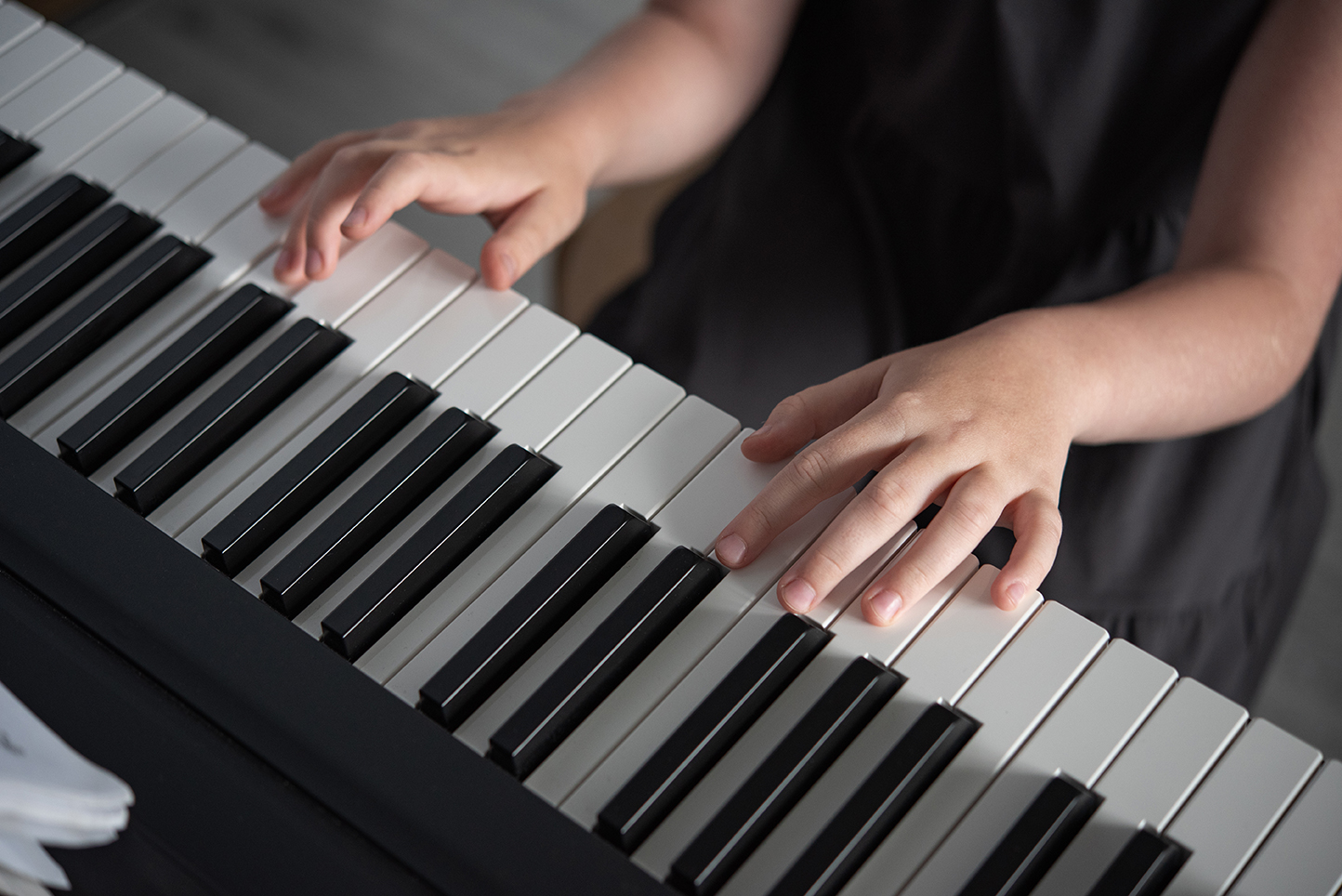
What 11 Weeks Of Piano Lessons Looks Like In The Brain
Imagine an adult in their mid-forties with no musical background who starts weekly piano lessons. In weeks one and two, the motor cortex is working hard just to coordinate independent finger movements.
The brain is forming entirely new motor programs, and it is effortful in a way that feels almost physical. By weeks four and five, those programs are becoming more automatic, which frees cognitive resources to start integrating auditory feedback. The sound of each note begins to feel wrong or right before conscious thought catches up. By week eight or nine, multisensory integration is noticeably stronger.
The brain is processing what the eyes see and what the ears hear with greater synchrony, a change measurable in laboratory conditions and noticeable in everyday tasks like following a conversation in a noisy room or tracking multiple things at once. This is not a hypothetical arc. It is the progression documented in the University of Bath research.
The Difference Between Practice And Playing
Music cognition research consistently distinguishes between deliberate practice and casual playing. Sitting at the piano and running through pieces you already know comfortably feels good and maintains existing skills, but it does not drive the same level of neural adaptation as working on material that is slightly beyond your current ability.
The brain changes most in response to challenge. Even 20 to 30 minutes of focused practice on a difficult passage produces greater cognitive returns than an hour of comfortable repetition. For anyone beginning piano primarily for brain health, this distinction matters more than the total number of minutes logged.
Frequently Asked Questions
What Does Playing Piano Do To Your Hands?
Regular piano practice strengthens the intrinsic muscles of the hand, increases individual finger speed and independence, and refines fine motor control. The risk side is equally real. Poor technique, overuse, or insufficient rest can lead to tendinitis, repetitive strain injuries, or in more serious cases, focal dystonia.
Can Adults With No Musical Background Still Benefit?
Yes, because neuroplasticity is present throughout adulthood, though it functions more slowly than in childhood. Starting piano as an adult is not a disadvantage in terms of whether brain benefits occur; the rate of structural change is simply more gradual, which means patience and consistency matter more.
Does Listening To Piano Music Offer The Same Brain Benefits As Playing?
Not to the same degree. Listening to music has real and well-documented benefits, including reduced anxiety, improved mood, and some effects on memory.
Does Playing Piano Help With ADHD?
The structured, rhythmic demands of piano practice require sustained focus, immediate feedback, and incremental skill-building, all of which align with therapeutic strategies used in ADHD management.
Conclusion
Piano's reputation as a brain-beneficial activity is not marketing. It is grounded in reproducible neuroscience across multiple research groups, methodologies, and populations.
What the research also makes clear is that the benefits are not limited to child prodigies or lifelong musicians. The mechanisms differ, the timelines differ, and the risks are real and worth knowing. But the core finding holds across populations and age groups.
The brain changes most in response to consistent challenge. Piano, practiced with even modest regularity and genuine attention to the material, provides exactly that. The science has made its case. The rest is up to you.
Jump to
A Few Things Worth Knowing Before You Read On
What Happens Inside The Brain When You Play Piano
How Piano Rewires The Brain Through Neuroplasticity
The Cognitive Benefits Of Playing Piano
Piano And Mental Health
Benefits Of Piano For The Brain By Life Stage
Life-Stage Benefit Snapshot
Is Piano Uniquely Good For The Brain Or Does Any Instrument Work?
The Honest Downsides Of Playing Piano
How Much Practice Does The Brain Actually Need?
What 11 Weeks Of Piano Lessons Looks Like In The Brain
The Difference Between Practice And Playing
Frequently Asked Questions
Conclusion

Suleman Shah
Author
Suleman Shah is a researcher and freelance writer. As a researcher, he has worked with MNS University of Agriculture, Multan (Pakistan) and Texas A & M University (USA). He regularly writes science articles and blogs for science news website immersse.com and open access publishers OA Publishing London and Scientific Times. He loves to keep himself updated on scientific developments and convert these developments into everyday language to update the readers about the developments in the scientific era. His primary research focus is Plant sciences, and he contributed to this field by publishing his research in scientific journals and presenting his work at many Conferences.
Shah graduated from the University of Agriculture Faisalabad (Pakistan) and started his professional carrier with Jaffer Agro Services and later with the Agriculture Department of the Government of Pakistan. His research interest compelled and attracted him to proceed with his carrier in Plant sciences research. So, he started his Ph.D. in Soil Science at MNS University of Agriculture Multan (Pakistan). Later, he started working as a visiting scholar with Texas A&M University (USA).
Shah’s experience with big Open Excess publishers like Springers, Frontiers, MDPI, etc., testified to his belief in Open Access as a barrier-removing mechanism between researchers and the readers of their research. Shah believes that Open Access is revolutionizing the publication process and benefitting research in all fields.

Han Ju
Reviewer
Hello! I'm Han Ju, the heart behind World Wide Journals. My life is a unique tapestry woven from the threads of news, spirituality, and science, enriched by melodies from my guitar. Raised amidst tales of the ancient and the arcane, I developed a keen eye for the stories that truly matter. Through my work, I seek to bridge the seen with the unseen, marrying the rigor of science with the depth of spirituality.
Each article at World Wide Journals is a piece of this ongoing quest, blending analysis with personal reflection. Whether exploring quantum frontiers or strumming chords under the stars, my aim is to inspire and provoke thought, inviting you into a world where every discovery is a note in the grand symphony of existence.
Welcome aboard this journey of insight and exploration, where curiosity leads and music guides.
Latest Articles
Popular Articles