A Creature With No Anus – Its Reclassification By Expelling From The Group That Includes Humans
As was previously believed, a tiny creature with no anus dating back around 530 million years is not the earliest member of a diverse animal group that encompasses everything from starfish to humans. Even though Saccorhytus coronarius lacked an anus, it was covered with holes, including a ring of tiny ones around its gaping mouth. Those apertures have previously been interpreted as primitive gills utilized for breathing.
Author:Suleman ShahReviewer:Han JuSep 01, 202220.5K Shares1.2M Views
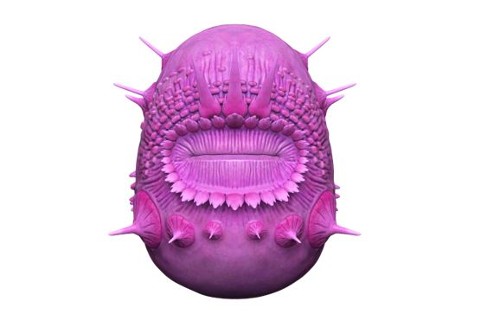
As was previously believed, a tiny creature with no anusdating back around 530 million years is not the earliest member of a diverse animal group that encompasses everything from starfish to humans.
Even though Saccorhytus coronariuslacked an anus, it was covered with holes, including a ring of tiny ones around its gaping mouth. Those apertures have previously been interpreted as primitive gills utilized for breathing.
The existence of gill slits seems to have firmly placed the creature in the deuterostome branch of the animal kingdom. The reclassification came about because of new 3D imagery showing how much like a minion it really is.
Need For Reclassification
Noseless "angry Minion" dinosaurs are more closely related to penis worms and mud dragons than they are to humans. Saccorhytus coronarius, which dates back 500 million years, was previously associated with deuterostomes, an animal group that gave rise to vertebrates and humans.
A different group of scientists has come to the conclusion that it is an ecdysozoan, which comprises insects and marine invertebrates. According to a paleobiologist who was not involved in the research, there is still some space for interpretation with this species.
According to the latest findings, there seems to have been more variation in body plan types among early ecdysozoans than was previously supposed, according to the latest findings.
When S. coronariuswas originally described in 2017, researchers assumed that the openings around the creature's mouth were pores, a possible ancestor to what would become gills.
The most recent research shows that S. coronariusdid have spines that came out of these holes, but they broke off when the animal turned into a fossil. No matter what group Saccorhytusis in, the fact that it doesn't have an anus is important because it shows how body shapes have changed over time.
Donoghue remarked that scientists still had a lot to learn about these ancient species, including whether or not S. coronariusspends its days hunting for food in silt on the sea bottom.
3D Model Reconstruction
According to a study published August 17 in Nature, researchers were able to create a 3D model of the half-millimeter-long species using fossil imaging data, revealing that the holes were really the fragmented remains of spines.
Since the spines could be positively identified, the organism was moved from the class Protista to Ecdysozoa, which includes arthropods and nematodes. There is a lot of difficulty in identifying biological traits in fossils because of the drastic changes that may occur over millions of years.
According to paleontologist Philip Donoghue of the University of Bristol in England, the majority of S. coronariusfossils have been flattened "like a really sad balloon that's folded in on itself." He claims the 3-D reconstruction makes S. coronariuscome to life, despite the fact that it looks like an angry minion.
Numerous S. coronariusfossils were X-rayed by Donoghue and his colleagues to show the progression of the fossils' decomposition. From what can be seen in the pictures, the skin's inner layer previously broke through pores and formed spines. After being fossilized, the inner layer was taken away, leaving behind the empty spaces.
Video unavailable
This video is unavailable: Original link to video
Conclusion
Spines help place S. coronariusin its new group, but the mystery of its missing anus remains. It's not strange because of its lack; numerous animals, including jellyfish that regurgitate their food, have evolved without it.
Since neither deuterostomes nor ecdysozoans usually have anuses, it is hard to put S. coronariusin either group.

Suleman Shah
Author
Suleman Shah is a researcher and freelance writer. As a researcher, he has worked with MNS University of Agriculture, Multan (Pakistan) and Texas A & M University (USA). He regularly writes science articles and blogs for science news website immersse.com and open access publishers OA Publishing London and Scientific Times. He loves to keep himself updated on scientific developments and convert these developments into everyday language to update the readers about the developments in the scientific era. His primary research focus is Plant sciences, and he contributed to this field by publishing his research in scientific journals and presenting his work at many Conferences.
Shah graduated from the University of Agriculture Faisalabad (Pakistan) and started his professional carrier with Jaffer Agro Services and later with the Agriculture Department of the Government of Pakistan. His research interest compelled and attracted him to proceed with his carrier in Plant sciences research. So, he started his Ph.D. in Soil Science at MNS University of Agriculture Multan (Pakistan). Later, he started working as a visiting scholar with Texas A&M University (USA).
Shah’s experience with big Open Excess publishers like Springers, Frontiers, MDPI, etc., testified to his belief in Open Access as a barrier-removing mechanism between researchers and the readers of their research. Shah believes that Open Access is revolutionizing the publication process and benefitting research in all fields.

Han Ju
Reviewer
Hello! I'm Han Ju, the heart behind World Wide Journals. My life is a unique tapestry woven from the threads of news, spirituality, and science, enriched by melodies from my guitar. Raised amidst tales of the ancient and the arcane, I developed a keen eye for the stories that truly matter. Through my work, I seek to bridge the seen with the unseen, marrying the rigor of science with the depth of spirituality.
Each article at World Wide Journals is a piece of this ongoing quest, blending analysis with personal reflection. Whether exploring quantum frontiers or strumming chords under the stars, my aim is to inspire and provoke thought, inviting you into a world where every discovery is a note in the grand symphony of existence.
Welcome aboard this journey of insight and exploration, where curiosity leads and music guides.
Latest Articles
Popular Articles