Drug Molecules In The Human Body Are Now Manipulated By Light
Drug molecules in the human body are now manipulated by light. According to a news statement issued by Tel Aviv University, scientists there have created a method to regulate the encapsulation and release of medicine molecules by exposing them to UV light.
Author:Suleman ShahReviewer:Han JuDec 20, 2022
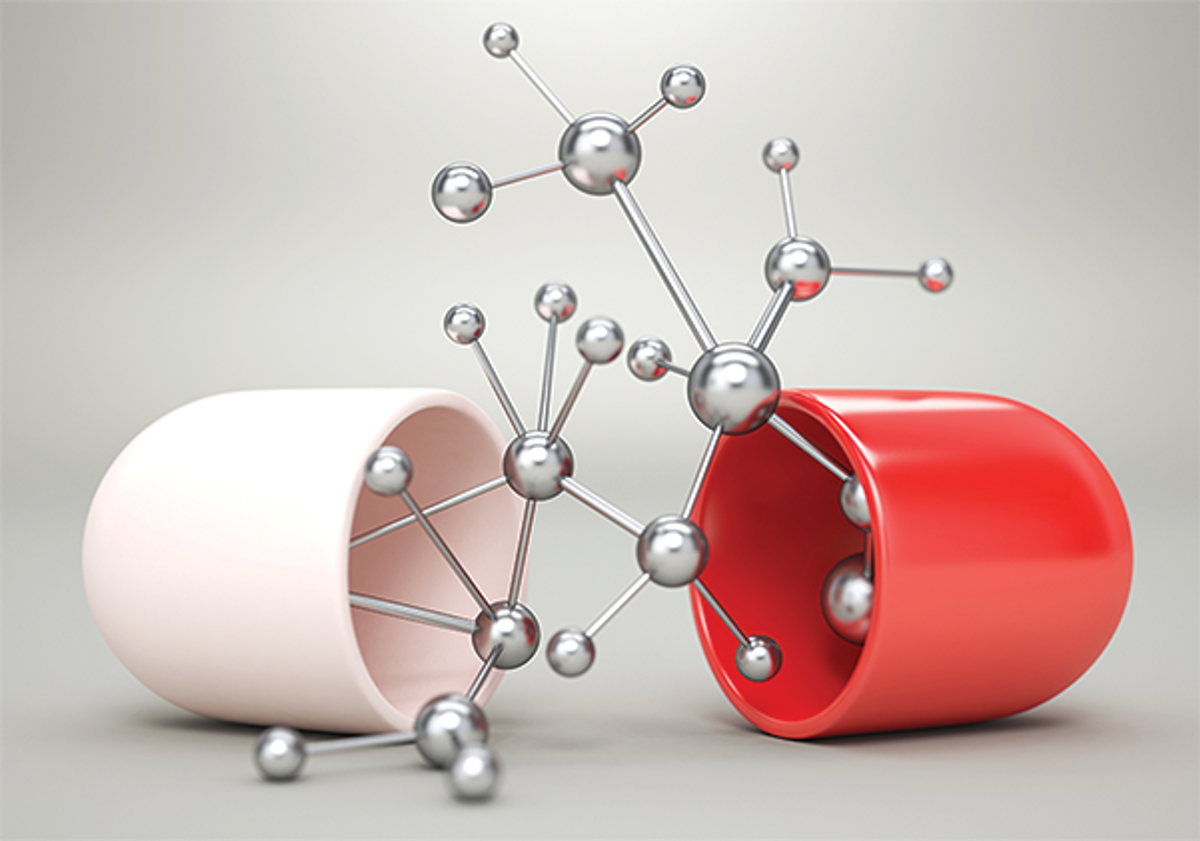
Drug molecules in the human body are now manipulated by light. According to a newsstatement issued by Tel Aviv University, scientists there have created a method to regulate the encapsulation and release of medicine molecules by exposing them to UV light.
The researchers are now hoping that this novel, effective encapsulation will enable significant molecular loading capacities, leading to the further development of delivery systems for the regulated release of biomolecules and medications in the body in response to external stimuli utilising light.
Drug molecules in the human body are now manipulated by light and Dr. Ayala Lampel from Tel Aviv University's George S. Wise Faculty of LifeSciences said:
“„Our goal was to engineer liquid-like compartments from a complex of peptide and RNA molecules that will allow efficient encapsulation of different biomolecules while keeping their native structure. The designed peptide and RNA form liquid-like compartments that resemble viral factories. We further developed these compartments to be stimuli-responsive by incorporating a protecting group to the peptide sequence that is cleaved following UV irradiation.- Dr. Ayala Lampel
The researchers discovered that the compartments could be easily regulated once they were subjected to UV light.
Lampel said:
“„The peptide with the photocleavable protecting group forms compartments with RNA that have higher encapsulation efficiency for various molecules compared to compartments without the protecting group. We showed that by exposing the compartments to UV light and releasing the protecting group, we can control the release of encapsulated biomolecules.- Dr. Ayala Lampel
There are even more benefits. Lampel continued, "Another unique property of this system is the high permeability and loading capacity of the encapsulated molecules, which is limited in part of the current technologies."
"Thus, this technologyopens opportunities for biomedical and biotechnological applications including encapsulation, delivery and release of drugs, protein, antibodies or other therapeutic molecules."
The Measles Virus Served As an Inspiration
The viral compartments created by the measles virus served as an inspiration for the new technology.
Viral factories are the compartments that the virus creates once it has infected the host cell and are responsible for hosting all the reactions that result in the production of new viral particles.
Recent research shows that these viral factories are fluid-like structures that change and grow inside the host cell through a process called liquid-liquid phase separation.
With the aid of innovative technology, medications could only be supplied to the proper target spot, preventing undesirable side effects like hair lossor stomach bleeding. The microbot was so small that it couldn't have a battery; thus, it was operated wirelessly by a magnetic field.
Conclusion
Drug molecules in the human body are now manipulated by light. The measles virus served as inspiration for the invention. This new and effective way of encapsulating could lead to the development of new ways to deliver drugs and biomolecules using light.

Suleman Shah
Author
Suleman Shah is a researcher and freelance writer. As a researcher, he has worked with MNS University of Agriculture, Multan (Pakistan) and Texas A & M University (USA). He regularly writes science articles and blogs for science news website immersse.com and open access publishers OA Publishing London and Scientific Times. He loves to keep himself updated on scientific developments and convert these developments into everyday language to update the readers about the developments in the scientific era. His primary research focus is Plant sciences, and he contributed to this field by publishing his research in scientific journals and presenting his work at many Conferences.
Shah graduated from the University of Agriculture Faisalabad (Pakistan) and started his professional carrier with Jaffer Agro Services and later with the Agriculture Department of the Government of Pakistan. His research interest compelled and attracted him to proceed with his carrier in Plant sciences research. So, he started his Ph.D. in Soil Science at MNS University of Agriculture Multan (Pakistan). Later, he started working as a visiting scholar with Texas A&M University (USA).
Shah’s experience with big Open Excess publishers like Springers, Frontiers, MDPI, etc., testified to his belief in Open Access as a barrier-removing mechanism between researchers and the readers of their research. Shah believes that Open Access is revolutionizing the publication process and benefitting research in all fields.

Han Ju
Reviewer
Hello! I'm Han Ju, the heart behind World Wide Journals. My life is a unique tapestry woven from the threads of news, spirituality, and science, enriched by melodies from my guitar. Raised amidst tales of the ancient and the arcane, I developed a keen eye for the stories that truly matter. Through my work, I seek to bridge the seen with the unseen, marrying the rigor of science with the depth of spirituality.
Each article at World Wide Journals is a piece of this ongoing quest, blending analysis with personal reflection. Whether exploring quantum frontiers or strumming chords under the stars, my aim is to inspire and provoke thought, inviting you into a world where every discovery is a note in the grand symphony of existence.
Welcome aboard this journey of insight and exploration, where curiosity leads and music guides.
Latest Articles
Popular Articles