Post Surgery Itching Rash - How To Treat It?
Any form of surgery involves the use of several chemicals and medicines. A post surgery skin parts that an itching rash might occur if an irritant is encountered during surgery or if a patient has an adverse reaction to an analgesic medicine. It is best to see a doctor about the rash so that they can help you figure out what is causing it and what you can do about it.
Author:Suleman ShahReviewer:Han JuSep 25, 2022

Any form of surgery involves the use of several chemicals and medicines. A post surgery itching rashmight occur if an irritant is encountered during surgery or if a patient has an adverse reaction to an analgesic medicine.
It is best to see a doctor about the rash so that they can help you figure out what is causing it and what you can do about it. It is unclear how many individuals will be affected by this since the particular risk factors for getting a rash after surgery are unknown.
According to the National Eczema Association, people who are sensitive to or allergic to any of these substances may develop a rash known as contact dermatitis. There are two primary subtypes of contact dermatitis:
- Irritable contact dermatitis:It's a reaction to a chemical, biological, or physical stimulus that causes irritation or inflammationof the skin, either temporarily or permanently. According to a meta-analysis of studies conducted in 2015, this type accounts for almost 80% of all occurrences.
- Allergic contact dermatitis:It is caused by an allergic reaction to contact with an allergen. It's when an allergen causes inflammation or irritation on the skin (also known as contact allergy). Most of the remaining instances take this shape. Typically, both disorders are confined to the skin parts that come into contact with the offending material or irritant.
What Causes Itching After Surgery
However, it is unknown how many patients get a rash after surgery.
But in most instances, one of the following reasons is to blame.
- Contact dermatitis:Some post-operative rashes may have a contact dermatitis trigger. It develops when the skin comes into contact with a substance that causes inflammation. The skin is sensitive to a wide range of substances and products, some of which are common (clothing colors, plants, cosmetics, etc.). According to the American Academy of Allergy, Asthma, and Immunology, approximately 15% to 20% of the population suffers from contact dermatitis.
- Medication-related allergic reactions:Some postoperative rashes may be caused by the drugs patients take after surgery. An adverse response to one medicine increases the likelihood that a person will have an allergic reaction to another medication, though the exact risk factors are unclear. A wide variety of drugs may trigger an allergy. Antibiotics and painkillers are two medications that patients often get before, during, and after surgery.
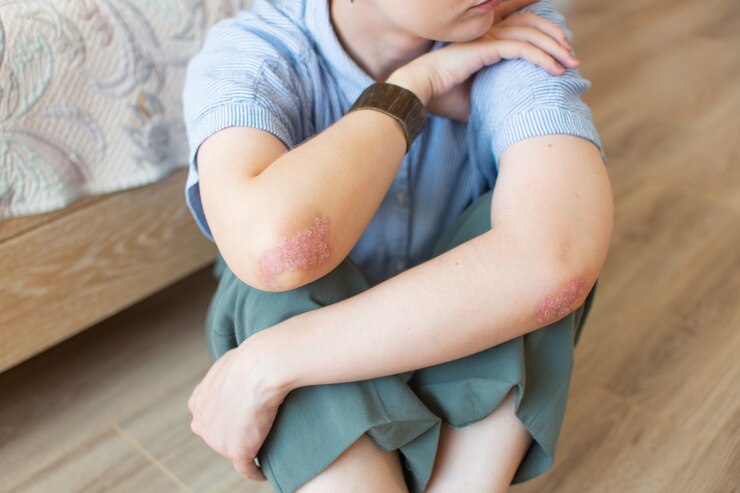
Symptoms And Diagnosis Of Itching After Surgery
Symptoms of contact dermatitis include:
- Sensation of heat or itching
- Color change or rash that may be seen.
- Slight enlargement
- The potential for fluid drainage from blisters on the skin (especially if you scratch at the rash)
- Skin that is thickening or scaling
- Elevated areas of skin
It may be impossible to tell whether a rash developed before or after surgery. Sometimes it's hard to discern the difference between a rash and an infection around the surgical incision. If the incision or surrounding region becomes red, discolored, hot, or itchy, or if green, yellow, or hazy drainage appears, you should see a doctor immediately. Possible signs of infection requiring prompt medical attention
If a rash appears after surgery, patients should inform their doctors immediately. The surgeon will probably want to visit the patient and examine the rash. They will probe for other signs of illness.
The surgeon may inquire about the patient's current medication program to rule out confounding factors. After surgery, the doctor may decide to change a patient's pharmaceutical regimen. Patients should keep taking all their prescribed drugs unless a surgeon or primary care doctor tells them to stop.
How To Treat Itching After Surgery
The itching around the wound area and bandages is one complication after surgery that most people don't expect to experience. Even while this feeling may be fleeting, it may nonetheless cause you some pain in the immediate post-op period.
Here are some ideas for getting rid of the itch and lowering the risk of infection:
- It would help if you resisted the urge to scratch:This is perhaps the most crucial fact to keep in mind, yet it may also be the most inconvenient. When a wound is healing, rubbing it raises the risk of infection, breaks sutures, and may worsen scarring.
- Infections and allergic reactions should be ruled out:Ensure you wash your hands thoroughly to avoid spreading any germs or causing any unwanted reactions. It's time to remove the bandage, so please do it carefully. Never apply force to a wound. Then, look for signs of fluid leakage through the sutures, worsening inflammation, or both. In the same way, some people may have a bad reaction to the glues used during surgery.
- Take the antihistamine pill(s) now:Many histamines are produced by the body when it heals. Most of the time, itching can be stopped by stopping the body from making histamines. This can be done by taking an over-the-counter antihistamine, like Zyrtec or Benadryl, by mouth.
- Calm down:Try using a cool cloth for further relief from the irritating itch. Above the bandages, apply ice to the wound and massage it.
- Don't take any drinks:The irritating properties of alcohol might make swelling and redness worse. After surgery, you should stay away from alcohol for a few weeks until most of the inflammation has gone down.
How Can I Deal With Itching As My Wound Heals?
People Also Ask
Why Do I Have A Rash After A Skin Transplant?
A patient can have an adverse reaction to the surgical instruments, the adhesives used to secure the skin, or any topical drugs used during the procedure. If the rash after surgery causes itching or discomfort, the patient may have additional symptoms. If a person's symptoms are severe or ongoing, they should make an appointment with a medical professional.
Can A Post Surgical Rash Appear On Only One Spot?
A rash after surgery might be restricted to one or two areas, or it can spread rapidly throughout the whole body. Rashes that appear just in certain areas almost often result from an allergic response to an external substance. Two distinct forms of contact dermatitis exist.
How Long Does It Take For Rashes To Go Away After Surgery?
It's likely an allergic reaction to a topical product like a lotion or an adhesive. Seek the opinion of your surgeon. Replace the harsh products with something more gentle, like Dove soap and an over-the-counter steroid. In a few weeks, it ought to clean up.
Why Do I Have An Itchy Rash After Surgery?
After surgery, an itchy rash often develops at the site of an injury or where an inadvertent stitch is placed on the skin. Although they are not the only possible source of irritation, they account for most cases.
Final Words
In most cases, a post surgery itching rash is to blame for developing contact dermatitis. One possible trigger is coming into contact with non-hypoallergenic bandages, adhesives, or antiseptics used during surgery. This rash often only appears in one or two areas. Most instances clear up within a few weeks with no treatment at all.

Suleman Shah
Author
Suleman Shah is a researcher and freelance writer. As a researcher, he has worked with MNS University of Agriculture, Multan (Pakistan) and Texas A & M University (USA). He regularly writes science articles and blogs for science news website immersse.com and open access publishers OA Publishing London and Scientific Times. He loves to keep himself updated on scientific developments and convert these developments into everyday language to update the readers about the developments in the scientific era. His primary research focus is Plant sciences, and he contributed to this field by publishing his research in scientific journals and presenting his work at many Conferences.
Shah graduated from the University of Agriculture Faisalabad (Pakistan) and started his professional carrier with Jaffer Agro Services and later with the Agriculture Department of the Government of Pakistan. His research interest compelled and attracted him to proceed with his carrier in Plant sciences research. So, he started his Ph.D. in Soil Science at MNS University of Agriculture Multan (Pakistan). Later, he started working as a visiting scholar with Texas A&M University (USA).
Shah’s experience with big Open Excess publishers like Springers, Frontiers, MDPI, etc., testified to his belief in Open Access as a barrier-removing mechanism between researchers and the readers of their research. Shah believes that Open Access is revolutionizing the publication process and benefitting research in all fields.

Han Ju
Reviewer
Hello! I'm Han Ju, the heart behind World Wide Journals. My life is a unique tapestry woven from the threads of news, spirituality, and science, enriched by melodies from my guitar. Raised amidst tales of the ancient and the arcane, I developed a keen eye for the stories that truly matter. Through my work, I seek to bridge the seen with the unseen, marrying the rigor of science with the depth of spirituality.
Each article at World Wide Journals is a piece of this ongoing quest, blending analysis with personal reflection. Whether exploring quantum frontiers or strumming chords under the stars, my aim is to inspire and provoke thought, inviting you into a world where every discovery is a note in the grand symphony of existence.
Welcome aboard this journey of insight and exploration, where curiosity leads and music guides.
Latest Articles
Popular Articles