Psoas Muscle Trauma - Exercises To Release It
Trauma is stored at the cellular level in the psoas muscle trauma. With the right yoga positions, trauma reactions that have been stuck in the body for a long time may be able to come out. When the brain and the rest of the nervous system get the alarming message that the body is under assault, the body goes on high alert and the psoas muscles tighten and contract to prepare for battle.
Author:Suleman ShahReviewer:Han JuOct 06, 2022
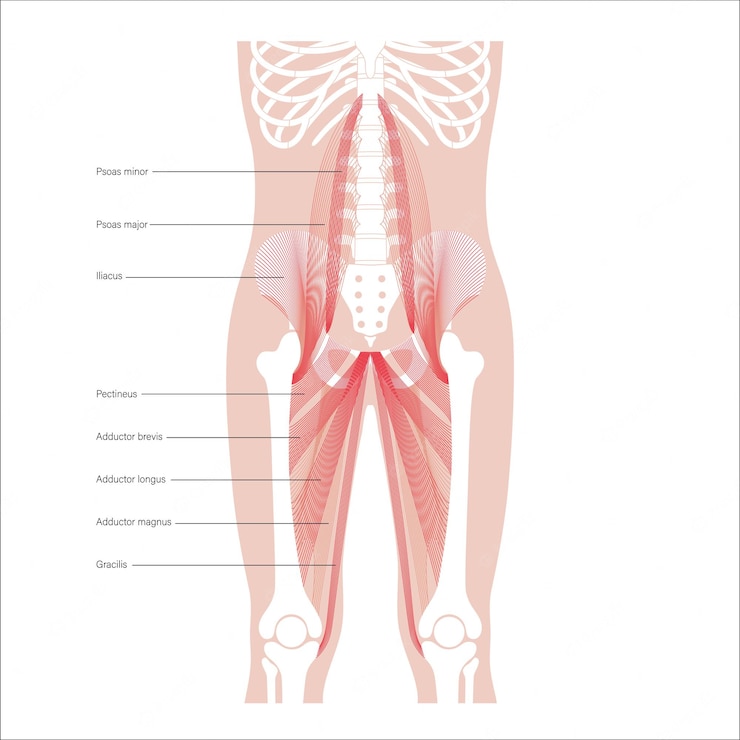
Trauma is stored at the cellular level in the psoas muscle trauma. With the right yoga positions, trauma reactions that have been stuck in the body for a long time may be able to come out.
When the brain and the rest of the nervous system get the alarming message that the body is under assault, the body goes on high alert and the psoas muscles tighten and contract to prepare for battle. The psoas is particularly vulnerable to the physical and mental tension that will be directed against it during sexual trauma.
What Does Happen In Psoas Muscle Trauma?
The psoas muscles link the upper torso to the pelvis in the lower back. They do a lot: walking upright, even shoulders, leg, and spine stance. Not only do we utilize them unknowingly, but we also perceive tensions in that region indirectly. They affect the diaphragm, the torso, and the upper back and shoulders.
These muscles store and recover from harm. The psoas is the fight-or-flight muscle of humans. These basic muscles protect the body's center of gravity directly in front of the third sacral vertebra (S3). These muscles connect the back, pelvis, and legs. Trauma contracts the psoas muscles.
To recuperate from trauma contractions, deep muscles must relax. It's commonly understood that following a stressful, traumatic encounter, a massage, a hot bath, or other exercises will resolve the trauma and restore the body's health. Not so with traumatic psoas tightness. Our socialization has reduced our body's capacity to relax these muscles.
Psoas Trauma Release Exercises
Please get in touch with us or your healthcare provider before beginning any trauma-release activities to be sure they are appropriate for you. If you have serious mental healthproblems or have been through a lot of trauma, you should only do these exercises with the help of a professional.
People with stress, anxiety, trauma, or post-traumatic stress disorder (PTSD) might benefit from trauma and tension release exercises, a somatic body-based treatment. It avoids the stressful linguistic hurdles that might arise while discussing an incident, emotion, or problem.
These include some light stretches for the lower body, which gradually increases to a light trembling in the legs. When the body begins to shake, you lay down and let the vibrations go through you without resisting them. Most individuals find that the act of shaking is pleasant, and some even find it therapeutic, either in termsof physical or mental relief.
Humans aren't the only animals with this mechanism or shaking capacity. It's the most natural way for the body to get rid of built-up tension and get back to a state of balance by releasing the charge of stress hormones and dangerous chemical buildup.
People Also Ask
What Does A Pulled Psoas Muscle Feel Like?
Tenderness, tightness, and pain in the hip and lower back are common complaints among those suffering with psoas pain. This material should help you determine whether your hip flexors are a sore spot.
How Long Does A Psoas Injury Take To Heal?
Healing from a psoas muscle injury might linger for weeks. The average time needed to recuperate is between 6 and 8 weeks. Physical therapy, medicine, and icing the injuries are common treatments. During the resting phase, the recommended activity is low, per medical professionals.
Final Words
The psoas muscles serve as a link between respiration and body alignment. For example, the simultaneous development of bipedal walking and respiration provides evidence that this is the case. Therefore, psoas muscle relaxation exercises result in a more active pelvis, a freer breathing rhythm, and a solid, grounded sense of body.

Suleman Shah
Author
Suleman Shah is a researcher and freelance writer. As a researcher, he has worked with MNS University of Agriculture, Multan (Pakistan) and Texas A & M University (USA). He regularly writes science articles and blogs for science news website immersse.com and open access publishers OA Publishing London and Scientific Times. He loves to keep himself updated on scientific developments and convert these developments into everyday language to update the readers about the developments in the scientific era. His primary research focus is Plant sciences, and he contributed to this field by publishing his research in scientific journals and presenting his work at many Conferences.
Shah graduated from the University of Agriculture Faisalabad (Pakistan) and started his professional carrier with Jaffer Agro Services and later with the Agriculture Department of the Government of Pakistan. His research interest compelled and attracted him to proceed with his carrier in Plant sciences research. So, he started his Ph.D. in Soil Science at MNS University of Agriculture Multan (Pakistan). Later, he started working as a visiting scholar with Texas A&M University (USA).
Shah’s experience with big Open Excess publishers like Springers, Frontiers, MDPI, etc., testified to his belief in Open Access as a barrier-removing mechanism between researchers and the readers of their research. Shah believes that Open Access is revolutionizing the publication process and benefitting research in all fields.

Han Ju
Reviewer
Hello! I'm Han Ju, the heart behind World Wide Journals. My life is a unique tapestry woven from the threads of news, spirituality, and science, enriched by melodies from my guitar. Raised amidst tales of the ancient and the arcane, I developed a keen eye for the stories that truly matter. Through my work, I seek to bridge the seen with the unseen, marrying the rigor of science with the depth of spirituality.
Each article at World Wide Journals is a piece of this ongoing quest, blending analysis with personal reflection. Whether exploring quantum frontiers or strumming chords under the stars, my aim is to inspire and provoke thought, inviting you into a world where every discovery is a note in the grand symphony of existence.
Welcome aboard this journey of insight and exploration, where curiosity leads and music guides.
Latest Articles
Popular Articles