Spinal Cord Injuries Types - Complete Vs. Incomplete
A spinal cord injury causes damage to either the spinal cord itself or the tissues and bones that are located nearby. It is possible that you will lose function or movement in different parts of your body, depending on the nature of the injury. There are spinal cord injuries types, it's best to know how they are different and what symptoms they cause, because, if the nerves can't talk to the brain after you or a loved one has a spinal cord injury, the body may lose some important functions.
Author:Suleman ShahReviewer:Han JuOct 07, 202225.7K Shares1.1M Views

A spinal cord injury causes damage to either the spinal cord itself or the tissues and bones that are located nearby. It is possible that you will lose function or movement in different parts of your body, depending on the nature of the injury.
There are spinal cord injuries types, it's best to know how they are different and what symptoms they cause, because, if the nerves can't talk to the brain after you or a loved one has a spinal cord injury, the body may lose some important functions.
Medical treatments, medication, and physical therapyare all forms of treatment. A more recent strategy involves energizing the nerves that are already at work.
Why Do We Need To Have Knowledge Of Spinal Function?
According to the spinal cord injury zone, your spinal cord is important because, without it, your brain and the rest of your body couldn't talk to each other. Impulses from the body to the brain and from the brain to the body travel through the spinal cord.
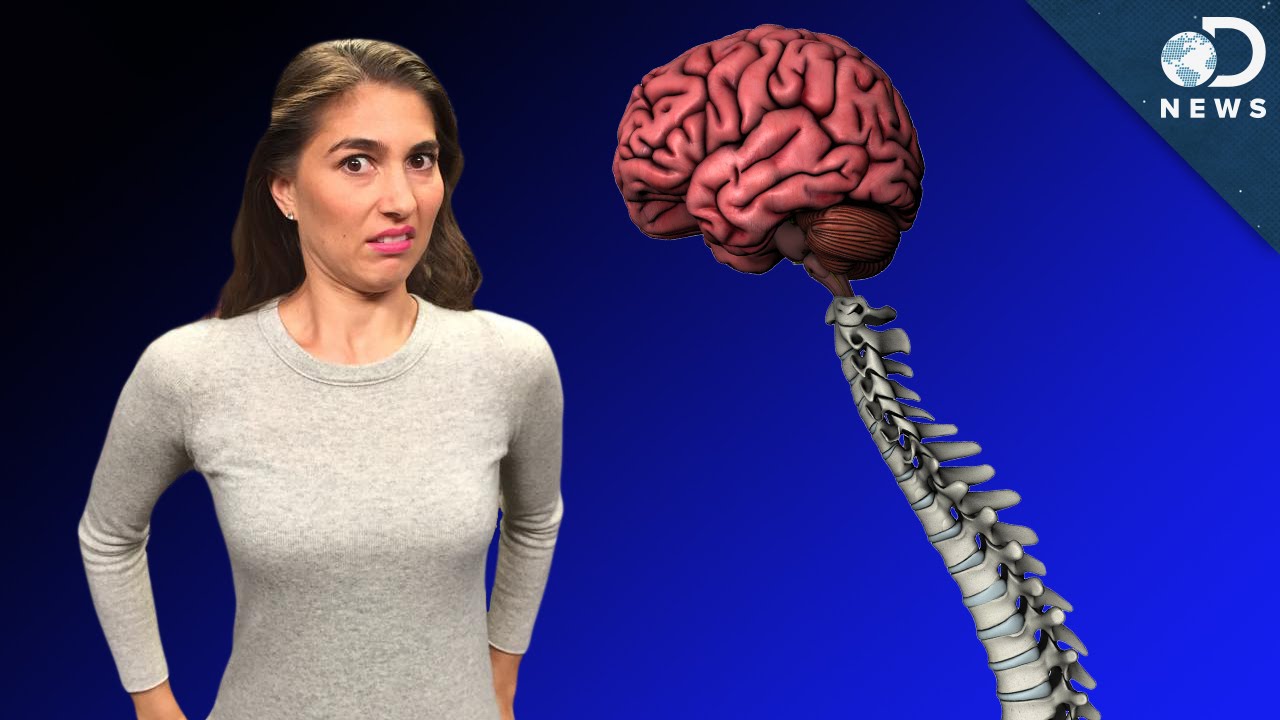
Your Spine Does More Than You Think
These impulses are different messages that our bodies send to our brains. Messages being sent to our brains? How's that? When there is damage to the spinal cord, the brain's messages can't get through.
Signals can reach the spinal nerves below the injury, but they can't go up the spinal tracts to the brain. Even though reflex movements can happen, they can't be controlled.
Types Of Spinal Cord Injuries

Since most spinal cord injuries are caused by trauma, there are many ways to get hurt and many kinds of spinal cord injuries. Spinal cord injuries are most often caused by car accidents, falls, gunshot wounds, sports injuries, or complications during surgery. Most spinal cord injuries can be broken down into two categories: complete and incomplete.
Complete Spinal Cord Injury
When there is a complete spinal cord injury, the part of the spinal cord that is hurt is hurt for good. Complete injuries to the spinal cord can cause paraplegia or tetraplegia.
Incomplete Spinal Cord Injury
When the spinal cord is only partly hurt, this is called an incomplete spinal cord injury. How well you can move and how much you can feel depends on where the spine was hurt and how badly. The healthand medical historyof a patient determine how things will turn out.
Based on research, incomplete spinal cord injury is broader than complete injury.
Incomplete Spinal Cord Injuries Are Increasingly Common
More and more people are getting injuries to parts of the spinal cord. Some of the most common types of incomplete spinal cord injuries are:
- Anterior cord syndrome
- Central cord syndrome
- Brown-Sequard syndrome
Anterior cord syndromeis a type of injury to the front of the spinal cord that damages the motor and sensory pathways in the spinal cord. You may still be able to feel some things, but it will be hard to move.
Central cord syndromeis an injury to the middle of the spinal cord that hurts nerves that send messages from the brain to the spinal cord. People with MS often lose fine motor skills, have their arms paralyzed, and have some, but usually less severe, problems with their legs
Some survivors also lose control of their bowels or bladders or are no longer able to have sexual relations.
Brown-Sequard syndromeis an injury that happens when one side of the spinal cord is hurt. The injury may be worse on one side of the body than the other. For example, the right side may not be able to move at all, but the left side may be fine.
How badly Brown-Sequard patients are hurt varies a lot from one person to the next.
Reasons Why People Undergo From Spinal Cord Injuries
- Motor vehicle accidents.
- Falls.
- Gunshot wounds.
- Sports injuries.
- Surgical complications.

Causes of Spinal Cord Injuries | Causes, Effects and Classifications | Neuroanatomy
People Also Ask
What Are The 5 Signs Of A Spinal Injury?
- Extreme back pain or pressure in your neck, head, or back.
- Weakness, incoordination, or paralysis in any part of your body.
- Numbness, tingling, or loss of sensation in your hands, fingers, feet, or toes.
- Loss of bladder or bowel control.
- Difficulty with balance and walking.
Can You Fully Recover From A Spinal Cord Injury?
There is no way to fix damage to the spinal cord, which is sad. But scientists are always working on new treatments, like prostheses and medicines, that might help nerve cells grow back or make the nerves that are still working after a spinal cord injury work better.
What Part Of The Spine Can Paralyze You?
A person with a complete C4 level injury is paralyzed from the shoulders down. A T12 level injury leaves a person paralyzed from the waist down.
Final Words
Even 18 months after a spinal cord injury, the person may be able to do some things again, especially if the injury was not complete. People with spinal cord injuries might be able to do some things again a few years after the injury, but this is very rare.

Suleman Shah
Author
Suleman Shah is a researcher and freelance writer. As a researcher, he has worked with MNS University of Agriculture, Multan (Pakistan) and Texas A & M University (USA). He regularly writes science articles and blogs for science news website immersse.com and open access publishers OA Publishing London and Scientific Times. He loves to keep himself updated on scientific developments and convert these developments into everyday language to update the readers about the developments in the scientific era. His primary research focus is Plant sciences, and he contributed to this field by publishing his research in scientific journals and presenting his work at many Conferences.
Shah graduated from the University of Agriculture Faisalabad (Pakistan) and started his professional carrier with Jaffer Agro Services and later with the Agriculture Department of the Government of Pakistan. His research interest compelled and attracted him to proceed with his carrier in Plant sciences research. So, he started his Ph.D. in Soil Science at MNS University of Agriculture Multan (Pakistan). Later, he started working as a visiting scholar with Texas A&M University (USA).
Shah’s experience with big Open Excess publishers like Springers, Frontiers, MDPI, etc., testified to his belief in Open Access as a barrier-removing mechanism between researchers and the readers of their research. Shah believes that Open Access is revolutionizing the publication process and benefitting research in all fields.

Han Ju
Reviewer
Hello! I'm Han Ju, the heart behind World Wide Journals. My life is a unique tapestry woven from the threads of news, spirituality, and science, enriched by melodies from my guitar. Raised amidst tales of the ancient and the arcane, I developed a keen eye for the stories that truly matter. Through my work, I seek to bridge the seen with the unseen, marrying the rigor of science with the depth of spirituality.
Each article at World Wide Journals is a piece of this ongoing quest, blending analysis with personal reflection. Whether exploring quantum frontiers or strumming chords under the stars, my aim is to inspire and provoke thought, inviting you into a world where every discovery is a note in the grand symphony of existence.
Welcome aboard this journey of insight and exploration, where curiosity leads and music guides.
Latest Articles
Popular Articles